Code Intelligence Platforms Staff Engineers Champion to Their CTOs
Staff engineers make the CTO case by connecting code intelligence to four business pressures.
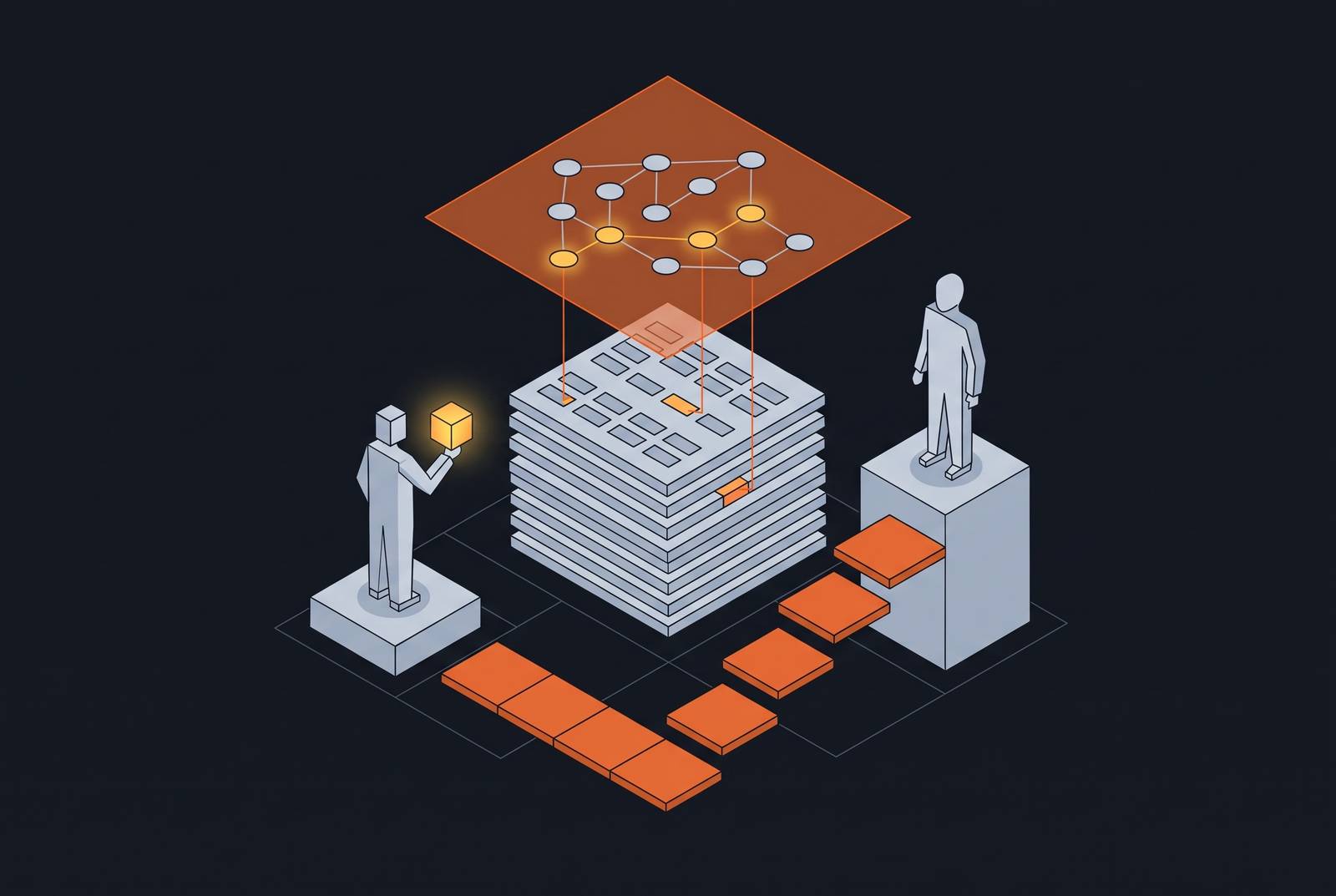
For large enterprise codebases spread across repositories, enterprise code search needs structural indexing, permission-aware context delivery to AI agents, and a way to deploy it that fits the organization’s security perimeter. The strongest internal case for a code intelligence platform connects those capabilities to four pressures, which are agent output quality, code custody, senior engineer interrupt load, and total cost of ownership. Staff engineers win CTO support by documenting those pressures.
Why staff engineers are the ones making the CTO case for code intelligence
Staff engineers work on the codebase day to day and help make decisions for the organization. They deal with questions about dependencies, incomplete agent output, and knowledge of the architecture that no one wrote down. They also have the technical credibility to explain why those problems persist across teams. That position makes them natural authors of an internal platform brief. Their task is to translate engineering friction into consequences a CTO can weigh against other investments.
A demonstration rarely supplies that argument on its own. It can show that a search works, but not establish why the organization should fund a new layer of infrastructure. Four pressures have converged in 2026 to give the brief its structure. AI agents need organization-wide context, sensitive code needs controls over who holds it, growing codebases lead to more interruptions, and legacy tooling needs to be judged on more of its costs.
Why AI coding agents underperform without org-wide codebase context
The immediate failure is a code context problem. An agent can have a capable model and a large context window while still lacking accurate, current evidence about how the organization’s software behaves. An agent working from a file or ticket may see the requested change without seeing the services that depend on it. The gap is between the evidence available to the agent and the system affected by its decision.
Different kinds of context serve different purposes. Instruction context supplies rules, conventions, and coding standards, while session context preserves the conversation and decisions made during the task. Codebase context supplies project structure, existing patterns, and architecture across repositories. That is where production work often breaks down. Decisions and tribal knowledge beyond the task at hand can decide whether a change that seems sound fits the wider system.
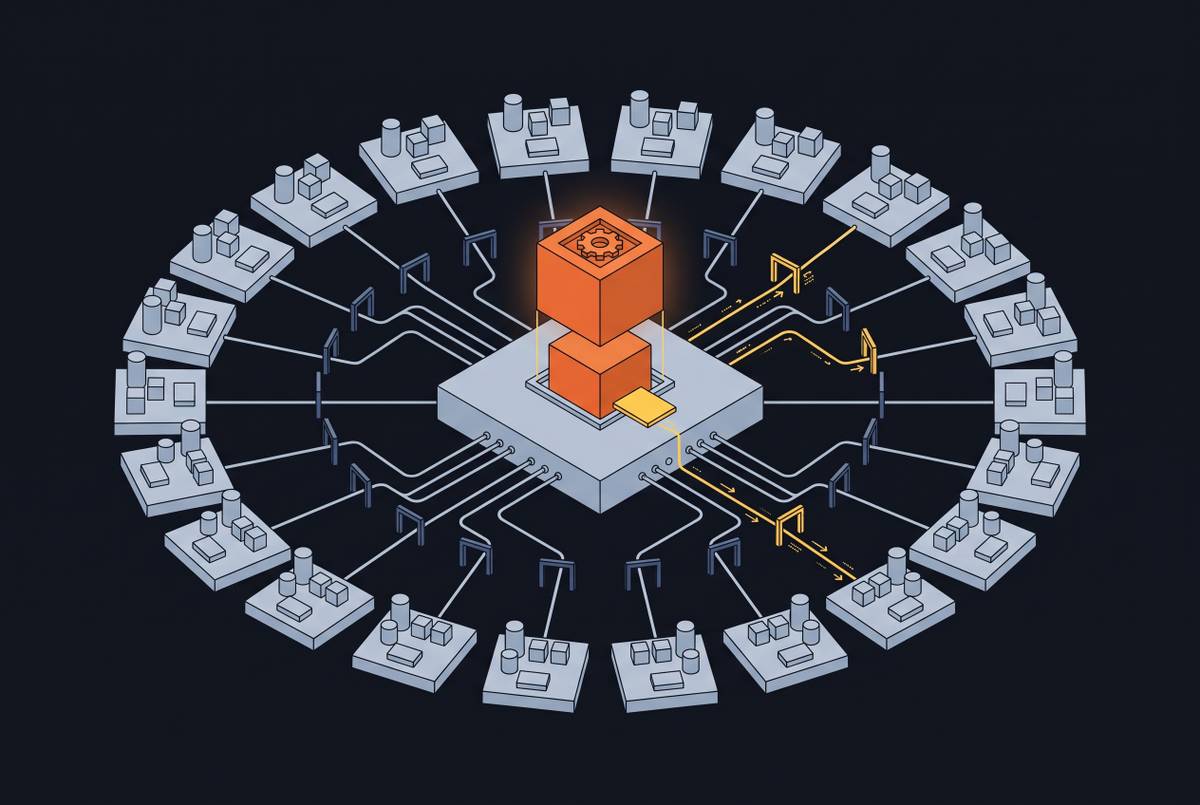
MCP’s wide adoption gives agents a protocol for connecting to data sources, while ranking relevance, enforcing permissions, and resolving conflicting signals require a separate method. Those jobs belong to a context layer between the connected sources and the agent. An organization-wide index can answer structural questions about which services consume a field, which repositories call an RPC, and what a service contract change could affect. A local checkout alone cannot provide that whole-codebase view.
The useful division of labor is precise. Static analysis discovers structure continuously, AI reasons over that structure, and MCP delivers the result to the agent. This keeps context up to date as the code changes, because a snapshot shows the architecture at one point in time. For the CTO brief, the distinction separates model selection from infrastructure selection. Even the best agent needs an evidence layer that represents the organization’s code.
How the argument shifts when sensitive code cannot leave the security perimeter
Enterprises that handle regulated, proprietary, or classified data need both context they can use and a secure perimeter. A hosted solution is insufficient when the required code cannot leave that perimeter. Most cloud-hosted agents transmit prompts and surrounding code context to a model provider by default, although the exact payload depends on configuration. The organization therefore needs to determine what moves and where when deploying the tool.
Shadow AI makes that question operationally immediate. Employees who use free-tier tools through personal accounts go around enterprise security controls. Netskope’s report says the rate of data-policy violations tied to the use of generative AI applications doubled over the previous year. The brief’s task is to connect that exposure to the organization’s own data classes and approved tooling. Confidential authentication logic, encryption key management, and financial calculation engines belong in tools that have enterprise data agreements and do not retain the data.
Code custody is separate from generated-code security. Veracode’s 2026 GenAI Code Security Report found an average security pass rate of roughly half across a wide range of models, with almost no change between testing snapshots. Syntax pass rates were near-perfect, but many tasks produced an OWASP Top 10 vulnerability when no security guidance was given. That risk remains even with better context. MCP infrastructure also introduces an attack surface, with early 2026 CVEs affecting servers, clients, and infrastructure components, including a CVSS 9.6 finding against mcp-remote and later findings reaching CVSS 9.8.
HIPAA requires a signed Business Associate Agreement when an AI tool processes or transmits PHI, including when prompts contain PHI examples from test environments. The EU AI Act’s high-risk system requirements entered enforcement as of December 2, 2027, with fines reaching a percentage of global annual turnover. The EU Cyber Resilience Act’s product vulnerability reporting requirements began September 11, 2026. These dates and frameworks establish the compliance surface without turning the engineering brief into legal interpretation.
Before buying, the organization also needs to check exactly what deployment claims cover. The notes say that code that directly processes PHI or PAN data belongs in self-hosted deployments or with a vendor that has a signed BAA. A coding agent setup has three separable pieces, namely the model, the harness and orchestration, and the execution environment. The CTO should ask which pieces move onto the organization’s infrastructure, because execution has the highest custody stakes. Claude Code v2.1.224, released August 6, 2026, adds self-hosted environments through a single command that turns the organization’s machines or containers into the compute layer for sessions. That identifies where execution happens while leaving the hosting of the other components unspecified.
How interrupt load compounds as codebase complexity grows, and what code intelligence actually addresses
Once custody requirements are established, the argument turns to engineering time. Senior engineers repeatedly answer where a service is defined, what depends on a model, which team owns a package, and what a change could affect. Those questions multiply as repositories accumulate. Adding engineers does not remove the underlying knowledge dependency and can increase the number of people asking.
The calendar cost is more concrete than a productivity percentage. With cross-repository code navigation, dependency tracing that takes hours can take seconds, and an index across repositories lets a team refactor dozens of them in one batch operation. These capabilities address work that otherwise requires reconstructing relationships by hand or consulting someone who remembers them. The operational benefits are faster search and less senior time spent supplying answers that the codebase itself can support.
Agents accelerate implementation but can begin without the knowledge the team has already accumulated. The notes identify context, rather than typing speed, as the reason onboarding time has not dropped despite near-universal agent adoption. Giving a new engineer an agent with full codebase context changes which questions reach a senior colleague. Architecture questions, dependency tracing, and plan-mode reviews can move to the agent, leaving product strategy, organizational history, and decisions made in meetings for human discussion.
Some onboarding support distributes setup guidance, leaving architectural knowledge unaddressed. Claude Code shipped a built-in /team-onboarding command in version 2.1.101 in April 2026, generating a teammate ramp-up guide from local usage. That serves a different purpose from an organization-wide index. Natural-language code search extends the latter’s value to PMs, support staff, and new hires who need explanations without filing a ticket. The answer may be highly valuable to the person asking even when supplying it is a poor use of senior engineering time.
Why the total cost of ownership argument against legacy code search tooling now lands differently
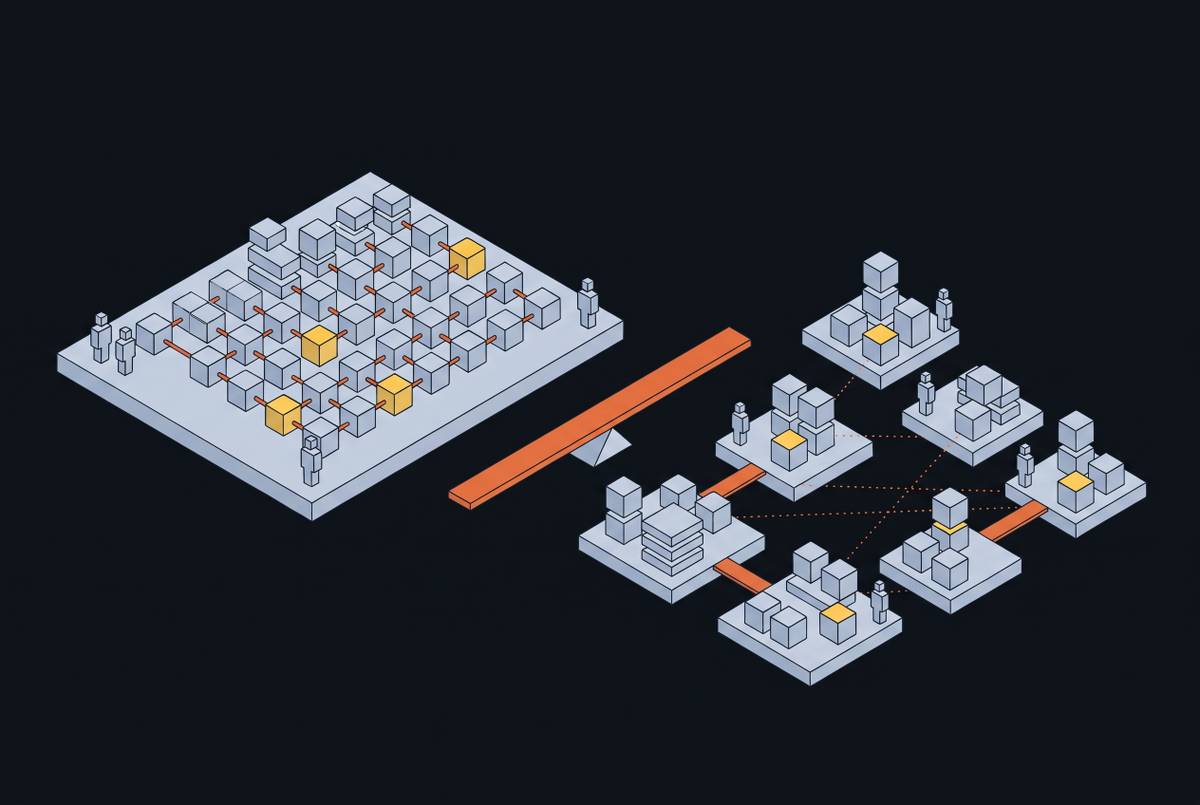
The budget comparison begins with a changed market condition. Legacy code search tools got their prices when there were few other ways to get cross-repository indexing at enterprise scale. That exclusivity no longer holds, and newer platforms have matched or exceeded incumbent feature sets at a fraction of the price. A renewal therefore needs more justification than familiarity. The relevant comparison is what each option costs to meet the organization’s current requirements, including its agents and security controls.
Seat price captures only part of that cost. Missing codebase context can degrade agent output, inadequate data controls can create compliance exposure, and unanswered structural questions consume senior engineering time. Onboarding drag adds another cost with each hiring cohort. These are not interchangeable expenses, so the brief needs to make each visible rather than conceal them within a general productivity estimate. The comparison is between the tool’s price and the full operating burden of using it.
Measured gains from enterprise AI coding deployments are meaningful, but they are not the order-of-magnitude improvements vendors advertise. The realistic case rests on compounding benefits from faster onboarding, fewer interruptions, and better agent output. Evaluation must consequently extend beyond model quality. Context management, permissions, MCP tools, sandboxes, audit logs, and cost controls determine how much supporting work and its associated cost fall to the internal platform team.
Deployment architecture can also change the procurement tradeoff. A platform that runs inside the organization’s infrastructure through a single container can provide capability without requiring code to leave that infrastructure. That claim still needs to be distinguished from the separate custody choices in the agent stack. A free tier that indexes real repositories lets the organization test what the tool is worth before buying it. It replaces an abstract purchase discussion with evidence from a live codebase.
How to structure the internal brief: assembling the four pressures into a CTO-ready argument
The practical brief should follow the CTO’s risk hierarchy. It should begin with compliance and security exposure, move to agent output quality, then establish interrupt cost before closing with total cost of ownership. This order differs from the technical investigation because the hardest constraint deserves attention first. A platform that cannot meet the organization’s custody requirements is not made suitable by better navigation.
Each pressure needs evidence from the organization itself. The security case needs a specific regulatory framework the company is under, while the agent case needs a documented incident in which missing cross-repository context affected output. The operational case needs a way to measure how often senior engineers are interrupted. The budget case needs a seat-price comparison that includes the cost of missing controls. Vendor benchmarks cannot substitute for these signals because the purchase decision concerns the organization’s own exposure and workload.
The brief should also address the existing-search objection directly. GitHub’s search is a tool people know, but cross-repository structural indexing, MCP-based context delivery, and natural-language access for non-engineers meet needs that differ from text search in a hosted repository interface. A search result and an answer about cross-service dependencies meet different needs. The brief needs to show which purpose the current setup leaves unmet.
The build alternative deserves a complete accounting as well. Its scope includes index infrastructure, MCP connector maintenance, SSO integration, audit logging, and ongoing updates as agent protocols evolve. The buy case needs to establish that the platform team’s time is worth more than the difference in price. A credible brief gives the CTO enough detail to weigh internal ownership against purchasing the capability.
The final request should be an evaluation. Starting with a free tier against a real repository lets engineering generate concrete before-and-after evidence to support a budget request. The evaluation can connect the organization’s documented context failures and interrupt load to what the platform actually answers, while keeping deployment requirements explicit. That gives the CTO a bounded next step. The staff engineer’s job is to secure a decision grounded in the organization’s code and constraints.