When Your AI Coding Agent Cannot See the Whole Codebase It Becomes a Liability Not an Accelerant
AI coding agents without full codebase visibility create architectural risk.
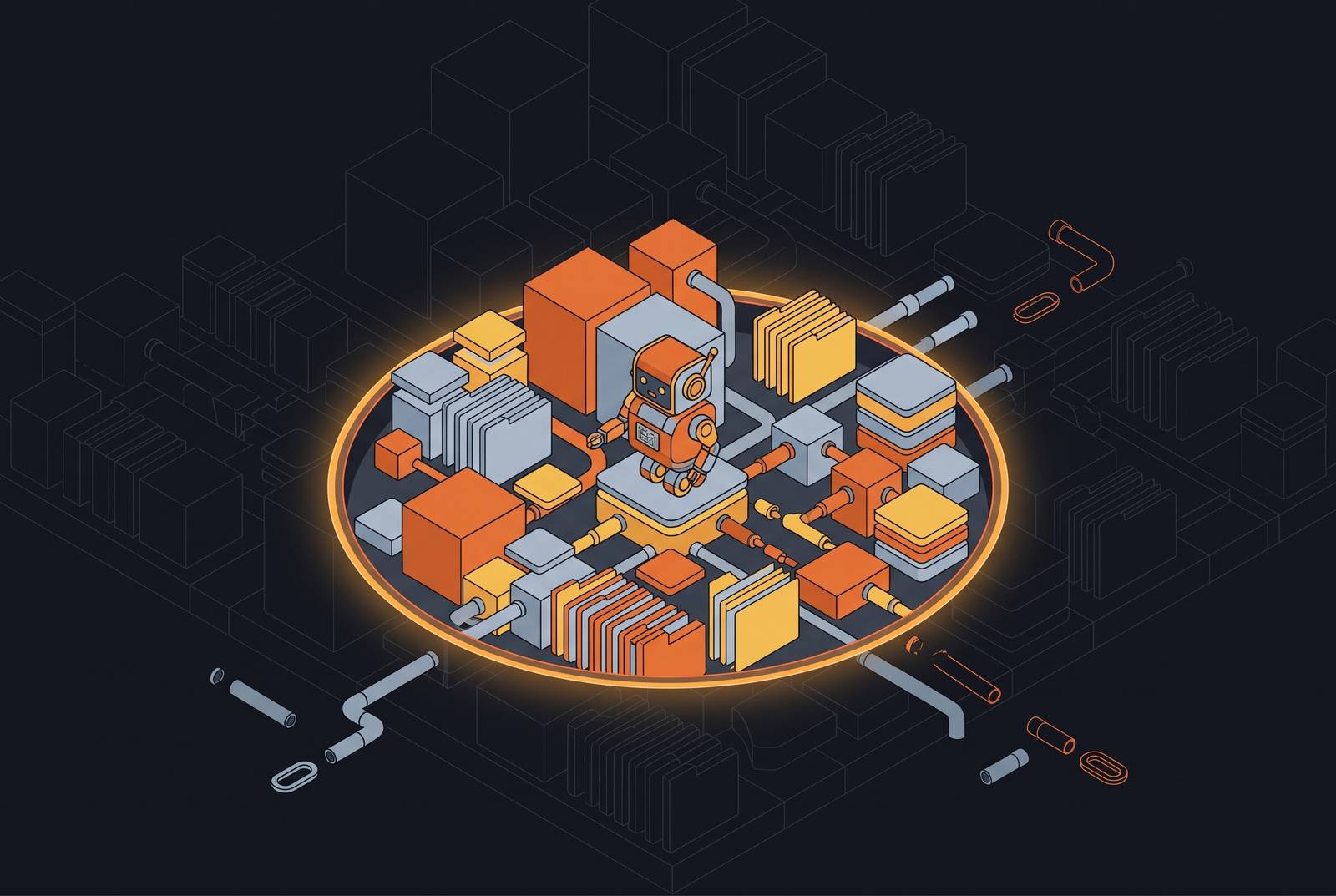
AI coding agents need organization-wide codebase context to make changes safely, and new engineers need that same context to get up to speed on unfamiliar systems. Repo-scoped assistants can accelerate boilerplate and local tasks, but they become a liability when changes affect dependencies they cannot see. For engineering onboarding and AI-assisted development alike, the answer is shared, searchable codebase infrastructure that preserves relationships and architectural knowledge across repositories.
Why AI coding agents operating on partial codebase context create compounding risk, not isolated mistakes
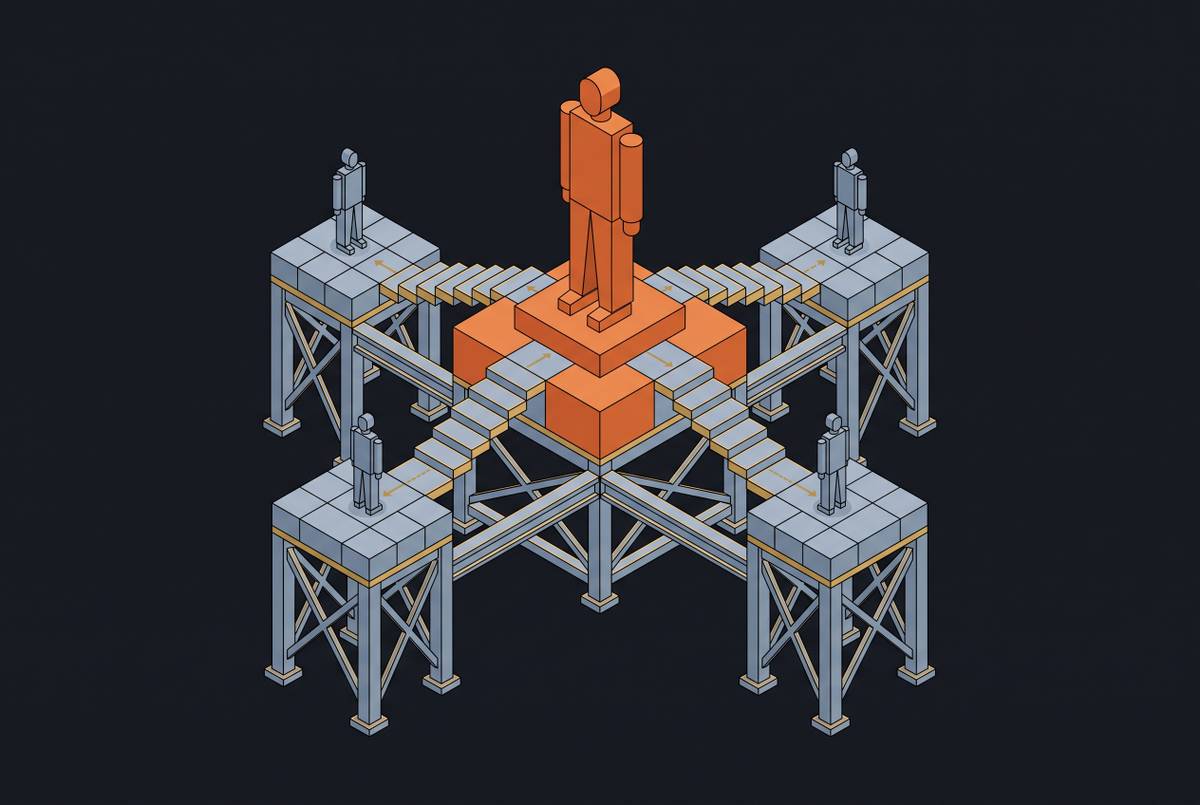
Consider a single-line protobuf change with downstream consumers in four services, across three teams and two languages. An agent working in one repository can inspect the contract it changes without seeing the services that consume it. Its edit may look right in the code it can see while breaking assumptions elsewhere. The danger comes from the mismatch between the scope of the change and the scope of the agent’s evidence.
Repo-scoped assistants are useful when those scopes align. Their ability to find, explain, and change source files can help with boilerplate generation and tasks that stay within familiar local code. But local correctness is not evidence of system-wide compatibility. A plausible change can violate a dependency or architectural decision that never entered the agent’s context.
That limitation produces compounding risk because each individually reasonable change can move the system further from its intended design. Later work then proceeds against code that already contains those divergences. Sourcebot provides agents with indexed, queryable context across repositories, giving them a way to investigate dependencies beyond the developer’s machine. That wider view helps fill the information gap, but agents also need access to a record of the architectural intent.
How the productivity paradox surfaces when agents lack codebase context
The productivity case weakens when the time saved writing code becomes time spent finding what that code broke. METR published findings in July 2025 showing that experienced developers took longer on complex tasks with AI tools than without them. Those developers had predicted a speedup and reported feeling faster. The result establishes a gap between perceived and measured productivity, rather than proving that every AI-assisted task is slower.
Missing context helps explain why that gap matters most in enterprise work. Indexing may skip large files, so the agent cannot see code it may need. Multi-file refactors need more code to work together than a local suggestion does, while legacy systems have constraints that may be hard to see from the task at hand. As more of the work depends on those relationships, the speed of generation says less about how much progress has been made.
Real gains in onboarding and boilerplate therefore do not establish whether cross-repository changes deliver a return on investment. The relevant calculation includes the debugging and correction required after the agent produces its answer. Where a self-hosted code intelligence layer such as Sourcebot makes other repositories searchable, an agent can investigate dependencies that would otherwise become debugging work later. That is a mechanism for reducing overhead, with the size of any productivity gain still uncertain.
Why the context window is not the actual problem, and why treating it as one makes things worse
Larger context windows are a genuine improvement because they let agents consider more material at once. They do not, however, provide durable memory or a map of relationships across an organization’s code. A source file placed in a prompt is available for that interaction, but its presence does not establish which remote services depend on it. Capacity and structural awareness solve different problems.
More material increases processing cost and latency, while relevant information can receive less attention when it sits in the middle of a long context. A snapshot assembled at the start of a session can also become stale as other developers change the code. Enlarging that snapshot does not make it a continuously maintained source of truth.
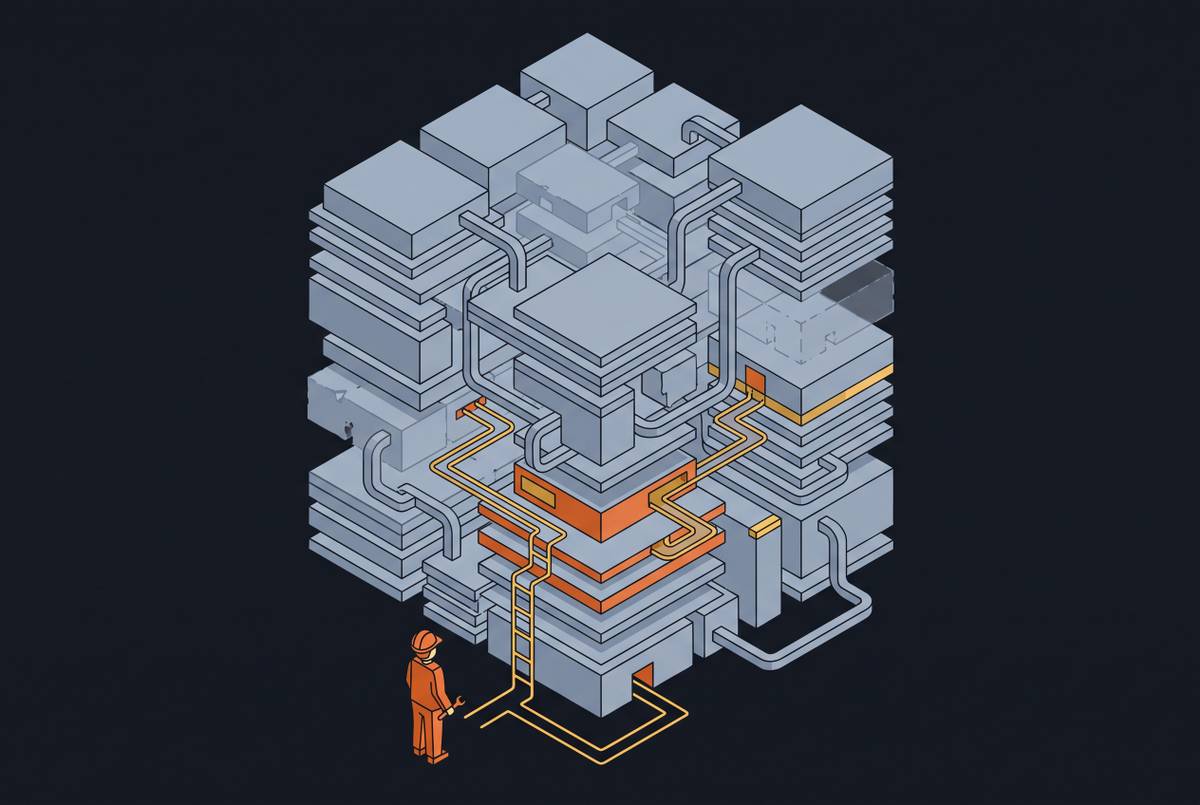
Persistent codebase memory instead gives the agent an indexed store it can query as the task develops. Enterprise search platforms, including Sourcebot, let agents find the code they need without loading every source file over and over. Relationship-aware memory adds a distinct capability by representing which functions, modules, and services depend on one another. Text or vector similarity can find related-looking snippets, but similarity alone does not establish a call relationship. Protobuf, OpenAPI, and GraphQL describe contracts rather than a continuously updated map of their consumers, so contract visibility cannot substitute for dependency visibility.
What stateless agents do to architectural decisions, cross-repository dependencies, and institutional knowledge
The protobuf scenario illustrates why cross-repository dependencies are a particularly dangerous blind spot. An agent asked to deprecate a field may search every file it can access and still miss consumers owned by other teams. When access ends at a repository boundary, the absence of local references cannot establish that a field is unused across the organization.
Architectural decisions create a different kind of blind spot because the missing information is often intent. A module deliberately decoupled from a service can look like an integration opportunity to an agent that sees only the implementation. Reconnecting it may appear to simplify the local design while reversing a decision reached through substantial deliberation. Persistent context must therefore record both where a boundary is and why it is there.
Institutional knowledge also needs to cover approved libraries, deprecated patterns, and the reasons for constraints that seem arbitrary. A stateless agent has no reliable recollection of a previous session’s explanation unless that knowledge has been recorded and made retrievable. Without it, each new task gives the agent another chance to bring back an approach the organization has abandoned. The resulting context drift is difficult to detect because it accumulates through changes that look reasonable in isolation. This is where incomplete context becomes a liability rather than an occasional inconvenience, since the agent can repeatedly undermine decisions the organization has already paid to make.
Why the "just-in-time retrieval" approach and the "pre-built knowledge graph" approach answer different questions
The technical debate concerns whether agents should discover context while working or query a representation prepared in advance. Anthropic’s guidance for Claude Code supports just-in-time exploration through tools such as grep, file reading, glob patterns, and AST parsing. This approach follows the task rather than guessing beforehand which files will matter. It is well suited to questions whose relevant code can be located by a symbol or string.
Anthropic also acknowledges the tradeoff when a search concerns vague relationships across an enormous codebase. Searching can use up the available context before useful work starts. More importantly, an agent’s ability to search does not itself supply access to every repository or preserve the relationships it discovers for later sessions. Just-in-time retrieval answers what the agent should inspect now, leaving open how the organization should retain structural knowledge.
A pre-built knowledge graph answers that second question by storing functions, classes, modules, dependencies, and typed relationships in a durable representation. Incremental updates keep that representation aligned with repository changes, while stored relationships can be reused across sessions. This helps the graph answer structural questions about callers, downstream services, and who owns a module. Enterprises need both approaches, but the graph is the foundation where cross-repository breakage is the principal risk. Just-in-time exploration can then inspect the code relevant to a particular task without having to rediscover the whole system.
How MCP became the connectivity standard that makes organization-wide context reachable for any agent
A shared context layer is useful only if the tools doing the work can reach it. The Model Context Protocol, or MCP, provides a standard mechanism for exposing that context to compatible agents without a bespoke integration for every framework. Search and graph infrastructure can therefore run separately from the coding assistant. The organization can keep one context layer that works across tools without rebuilding its knowledge for each one.
That separation also broadens the value of the infrastructure beyond code generation. Information about services, APIs, callsites, fields, third-party integrations, and sensitive dataflows can support security and privacy teams, compliance workflows, and SOC investigations. Anthropic’s engineering documentation on MCP code execution explains how agents can use more tools with fewer tokens. This cuts the context overhead of using tools, but the protocol itself does not build accurate knowledge of the codebase.
The connectivity layer also becomes a security surface. MCP implementations can introduce risks involving malicious code execution, remote access control, credential theft, and gaps in authentication and authorization. Organizations should therefore apply the same security rigor to an MCP server that they apply to other APIs. Standard connectivity is a reason to make shared context practical while maintaining controls over who can retrieve it.
Why self-hosted context infrastructure is the only viable path for enterprises with sensitive codebases
For an enterprise that requires sensitive code to remain within its own environment, a cloud-hosted context service cannot satisfy that boundary. The context index must run on infrastructure the organization controls, whether that is physical servers, a private cloud environment, or a customer-managed VPC. This gives the organization control over security settings, audit requirements, and data governance.
However, the label alone does not establish where code goes. An open-source client running internally can still send source material to an external model endpoint. Due diligence must establish where inference happens and what data leaves the perimeter. The location of the agent, the context store, and the model all matter to that answer.
Governance requirements make these distinctions consequential. The NIST AI Risk Management Framework and EU AI Act establish foundations emphasizing transparency, accountability, and human oversight. Depending on their sector and work, organizations may also face requirements involving HIPAA, PCI DSS, FedRAMP, CMMC, or ITAR. A deployment description is not evidence that those obligations have been met. Bring-your-own-model flexibility lets teams choose the LLM provider and where code is sent, but a strict internal-only requirement still calls for an internal endpoint.
How can developers and AI agents search an entire company’s codebase in practice?
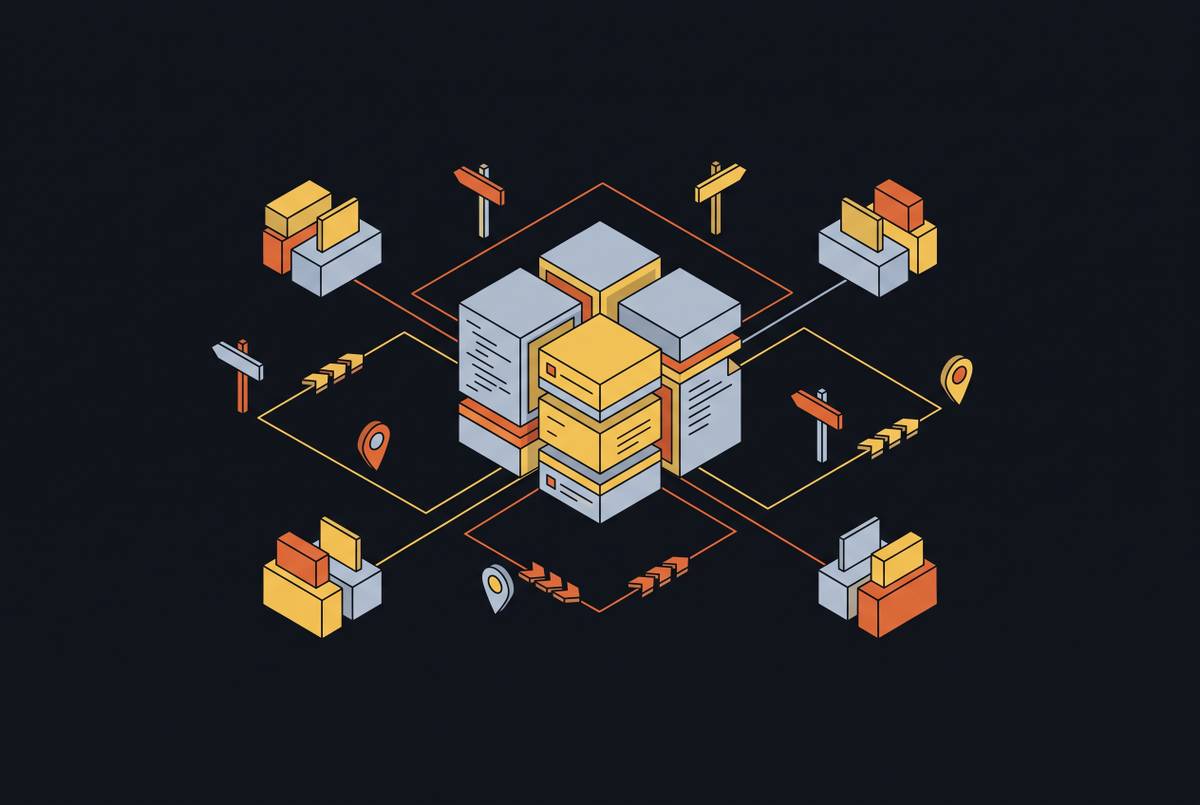
In practice, the architecture brings together organization-wide indexing, a lasting record of relationships, governed context, and MCP access, all within the required deployment boundary. Sourcebot supplies the self-hosted code intelligence layer for searching, navigating, and understanding repositories across an organization. It deploys through Docker Compose with a primary container, Postgres, and Redis. Its MCP connectors expose cross-repository search to Cursor, Claude Code, and other MCP-compatible agents, extending their reach beyond locally available repositories.
Sourcebot lets new hires, PMs, and support staff ask natural-language questions across the codebase, reducing dependence on senior engineers for routine explanations. Its bring-your-own-model configuration lets teams choose their LLM provider and control where code is sent, subject to the endpoint distinction described above. A free tier that indexes real repositories allows teams to evaluate the capability before a purchase decision.
Cognee is an open-source option that builds a code knowledge graph from AST-level parsing, exposes it through MCP, and supports incremental updates. CLAUDE.md, AGENTS.md, and similar context files record architectural decisions, approved patterns, and deprecated libraries. Packmind supports this ContextOps governance layer through tooling that includes pre-commit drift detection and automated distribution across repositories. These capabilities complement code search by preserving relationships and rules that source retrieval alone does not supply.
KISS Sorcar, an open-source project from UC Berkeley, provides a reference architecture for the multi-agent execution pattern rather than a replacement for shared code intelligence. Its five-layer hierarchy combines engineering principles in the system prompt with git worktree isolation and automatic continuation across sub-sessions through summarization. Those execution features address how an agent sustains work, while the shared context infrastructure addresses what it can know. The same distinction matters for new engineers, who need access to the organization’s code and reasoning. Teams that treat codebase context as infrastructure, rather than a developer convenience, establish the conditions for AI coding agents to become genuine accelerants.