Codebase Orientation Techniques for Distributed Engineering Teams
Distributed teams need deliberate systems for what proximity used to teach automatically.
The onboarding problem in distributed engineering teams is not missing documentation. It is that no one planned for how co-location quietly transfers knowledge. In an office, a new engineer absorbs architectural reasoning by overhearing conversations, watching how senior engineers react to incidents, and asking questions opportunistically. None of this requires a system, because proximity is the system.
Distributed teams have no passive channel. Every piece of context that would have transferred ambiently must now be produced deliberately and made retrievable on demand. The problem is not that new engineers read too slowly. It is that every question they cannot answer from the codebase alone must be routed through a person whose time is already fully allocated.
Full Scale's onboarding guide identifies the cultural layer, how decisions get made, who to ask about what, and when to speak up, as the invisible layer that remote onboarding consistently skips. The cultural layer is distinct from the technical layer of codebase, architecture, and tooling, and from the administrative layer of accounts, access, and payroll. Effective distributed onboarding must address all three deliberately, because none of them transfers by default.
Why the 30-day ramp measures senior availability, not new-hire ability
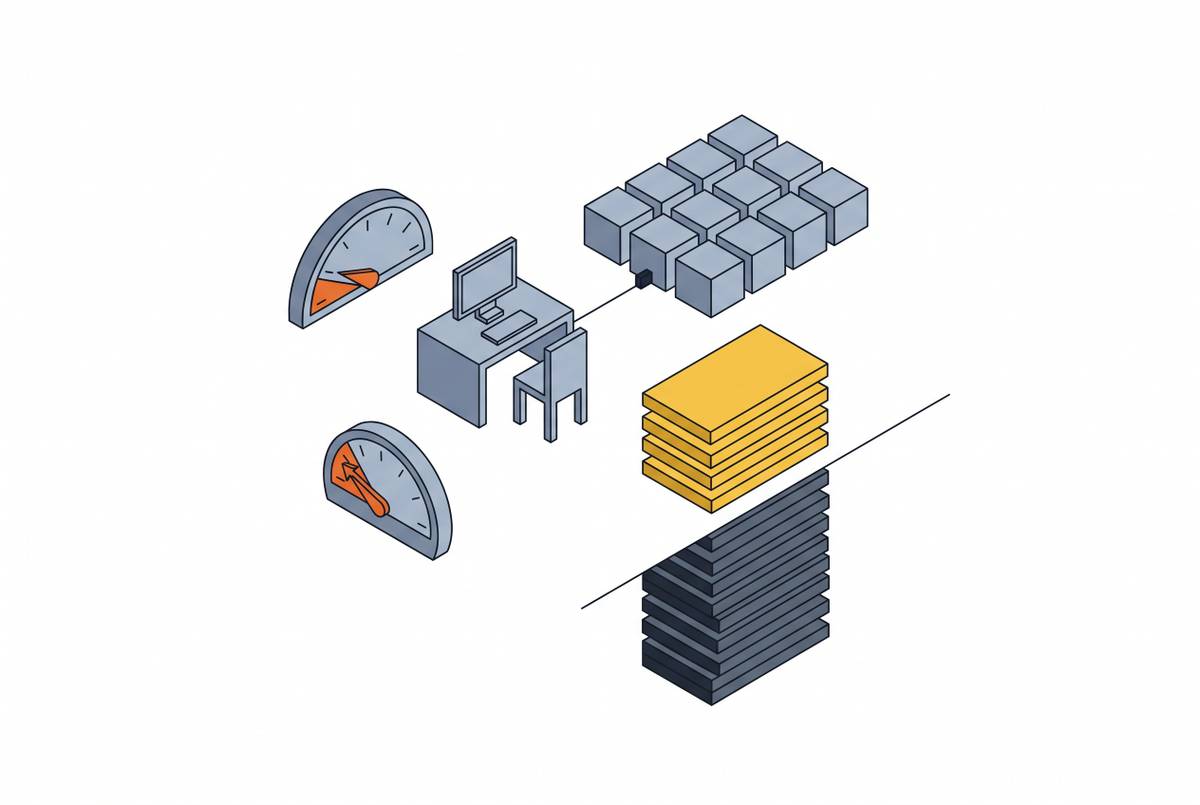
The canonical onboarding timeline is not a measure of how long it takes a new engineer to read a codebase. It is a measure of how many senior-engineer hours are available to translate it. Consider a team where senior engineers noticed the specific shape of a change after deploying better codebase tooling: the slice of their week that used to absorb onboarding interruptions collapsed to a fraction of itself, and they recovered their afternoons.
The new engineer's reading speed sets a floor, but the actual rate of knowledge transfer is gated by the senior's available hours. The goal is not to produce better documents for the new hire to read, but to remove senior engineers from the critical path of routine codebase questions. Any technique that fails that test merely redistributes the bottleneck rather than eliminating it.
What the codebase itself has to make legible before any tool or technique can help
No orientation technique, AI or otherwise, can substitute for a codebase that has been made structurally legible. The goal of architecture immersion is not reading the docs. It is accurate mental models: how requests flow through the system, where data changes state, which services carry operational risk, and why the code looks the way it does.
Strong teams treat environment setup as an engineering system, not an IT ticket queue. A new engineer should be able to clone, run the app, execute tests, and reach documentation without waiting on anyone. If that is not true on day one, the orientation process has already failed before it started.
Specific legibility artifacts that strong teams produce include annotated key file maps that surface the files most important to understand and mark those dangerous to modify without coordination, service boundary documentation, deployment path descriptions, observability entry points, and runbooks for common developer tasks. A useful heuristic from the research: if a staff engineer has to explain the same subsystem three times in a month, that explanation belongs in writing or on video. The repetition is a legibility debt signal.
The codebase-onboarding skill on GitHub enumerates what production-quality onboarding documentation covers: architecture overviews with system diagrams, annotated key file maps, step-by-step local setup guides, common developer task runbooks, debugging guides with real error solutions, and contribution guidelines. A well-documented codebase with clean code principles, centralized tooling in an internal developer platform, and automated infrastructure means onboarding a junior engineer approaches the ease of onboarding a senior. A team drowning in legacy and manual toil makes every orientation technique harder regardless of how well it is designed.
The pre-boarding window that distributed teams consistently waste
For distributed teams, the week before a new engineer's start date is the highest-leverage moment in the orientation window, and most teams spend it on nothing. Full Scale's guide is direct: the best onboarding starts before the new developer's first morning. The week before someone joins is the cheapest time to remove friction, and almost no one uses it.
Practical pre-boarding for distributed engineers means hardware shipped at least one week before the start date with setup instructions, and email, source control, VPN, Slack or Teams, and internal documentation access provisioned before day one. CorrectContext's 2026 onboarding guide emphasizes that granting read-only access to engineering handbooks, architecture documentation, and code style guides before day one gives the new hire access to key documentation before their first day. That is a meaningful advantage in asynchronous, multi-timezone teams.
The distributed-specific stakes are higher than most teams acknowledge. Full Scale frames pre-boarding accountability directly: define what success looks like for this person at thirty, sixty, and ninety days before they start. For distributed and offshore engagements where payroll, equipment, and HR are handled by a staffing partner, the organization can direct its full pre-boarding energy at the two layers that actually decide whether the engagement works: technical integration and cultural integration.
Structured immersion phases that replace what pairing and hallway conversation used to do
Distributed engineering teams need a phased immersion structure with explicit milestones and deliverables because the informal progress signals that co-located teams read by observation do not exist asynchronously. The 30-60-90 day framework divides the first three months into distinct phases with clear goals, learning objectives, and performance expectations. But this structure must be written down and communicated, not assumed.
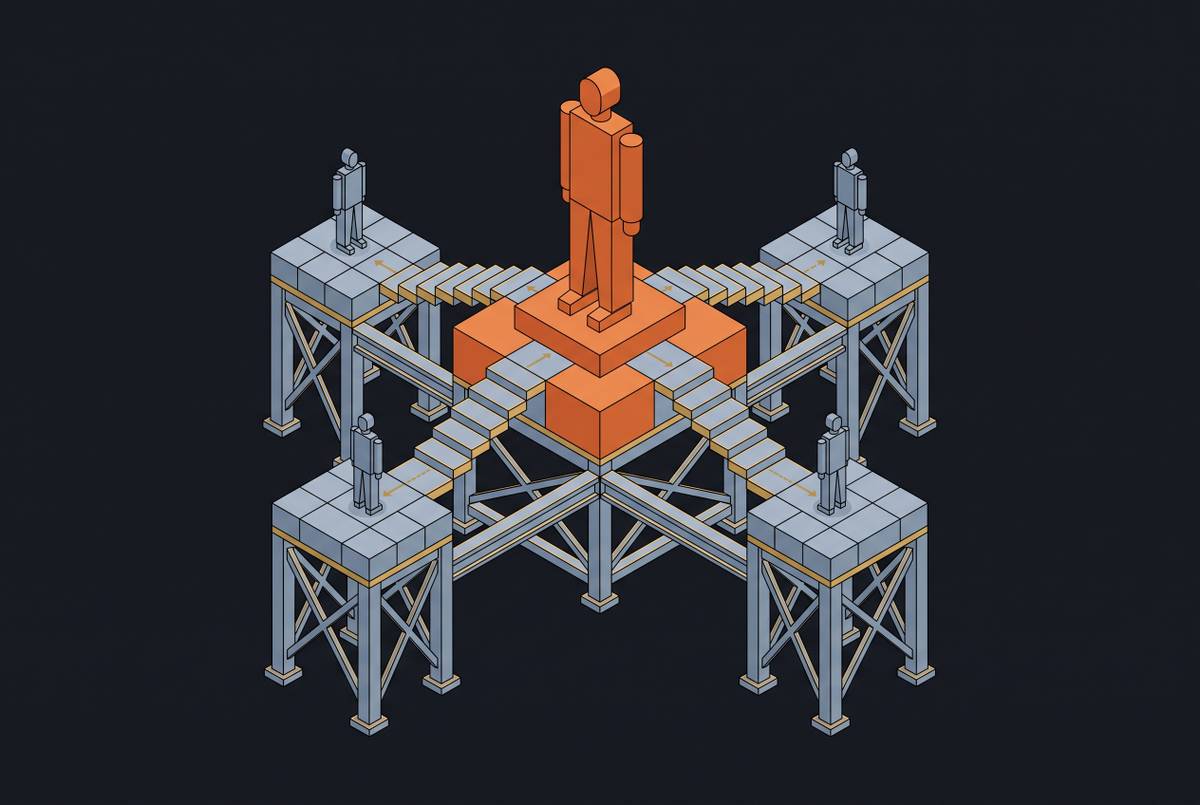
CorrectContext's guide identifies the onboarding buddy as the operational mechanism for the social and informal layer. The buddy is a peer, not a manager, at a similar or slightly senior level, with the company at least six months, available for 30 to 60 minutes weekly for the first three months. None of this gets established by proximity.
Milestones replace ambient progress signals. The first commit by end of week one, the first PR, even a small one, by end of day ten, and the first independent ticket closed by end of the first sprint are observable, asynchronous-friendly markers. Distributed onboarding must calibrate for both, since many distributed teams use both models simultaneously.
How AI coding agents change who fields codebase questions — and what that requires
The structural win from AI coding agents in onboarding is not that they help new engineers read code faster. It is that they remove senior engineers from the critical path of routine codebase questions when deployed correctly. The result is that seniors get faster at producing answers, but new engineers still wait in queue for those answers.
The correct routing is the inverse. The senior engineer is consulted only for questions the tool cannot answer: product strategy, organizational history, and decisions that lived in meetings. Anthropic ships a named "Understand new codebases" workflow in the official Claude Code documentation, with example prompts the new engineer can use from day one to interrogate repository structure, trace how a feature works, and identify every file that touches an assigned area. SpaceX completed its acquisition of Cursor's maker in August 2026 and the product continues, but privacy terms warrant monitoring for teams with sensitive codebases.
The comprehension-debt objection is the sharpest counter-claim and deserves a direct answer. The response is Plan Mode, activated by pressing Shift+Tab twice in Claude Code, which asks the agent to read relevant files, check conventions, and propose an implementation plan before writing any code. The engineer must then read and question the plan before approving. This keeps the comprehension loop open and separates the workflow from delegating code generation entirely.
What AI agents need from the codebase to give reliable answers — and why most codebases aren't ready
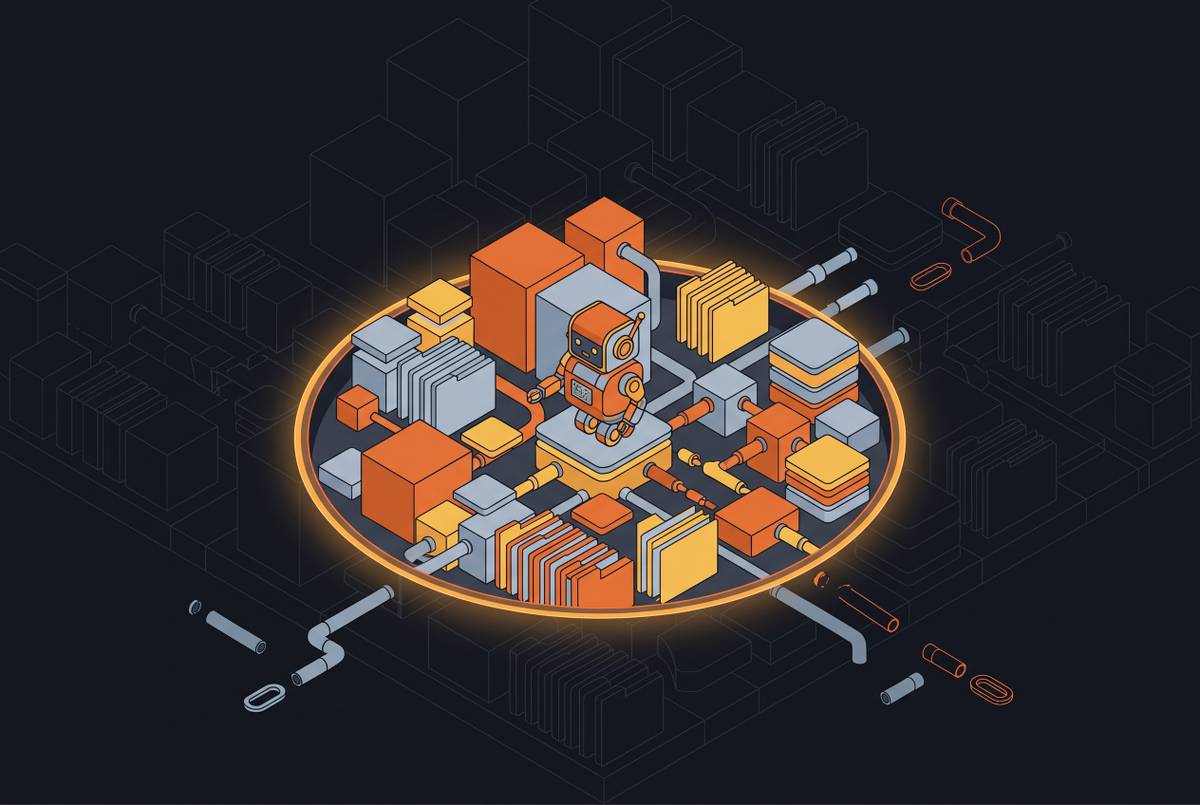
An AI coding agent deployed against a poorly indexed, context-sparse codebase returns the same kind of incomplete answer a new engineer would get from a wiki page that is two years out of date. The tool is only as good as the context layer underneath it. Context for coding agents has four dimensions: instruction context covering rules, conventions, and coding standards via CLAUDE.md, AGENTS.md, and.cursor/rules; codebase context covering project structure, existing patterns, and architecture; tool and skill context covering MCP servers, slash commands, and reusable skills; and session context covering conversation memory and decisions taken in the current task.
A critical distinction separates the harness layer from the context layer. The harness, Claude Code, Cursor, or Copilot, decides whether an agent can act. The context layer decides whether that action is correct. Neither substitutes for the other, and what the harnesses do not solve is context readiness: the business vocabulary, data ownership, and architectural lineage that determine whether a sandboxed, approved change is actually correct.
For distributed teams with large or multi-repo codebases, context pollution is an operational risk. The emerging best practice is scoped, per-subagent tool sets rather than global access. It is one example of purpose-built tooling for managing the instruction context layer at scale.
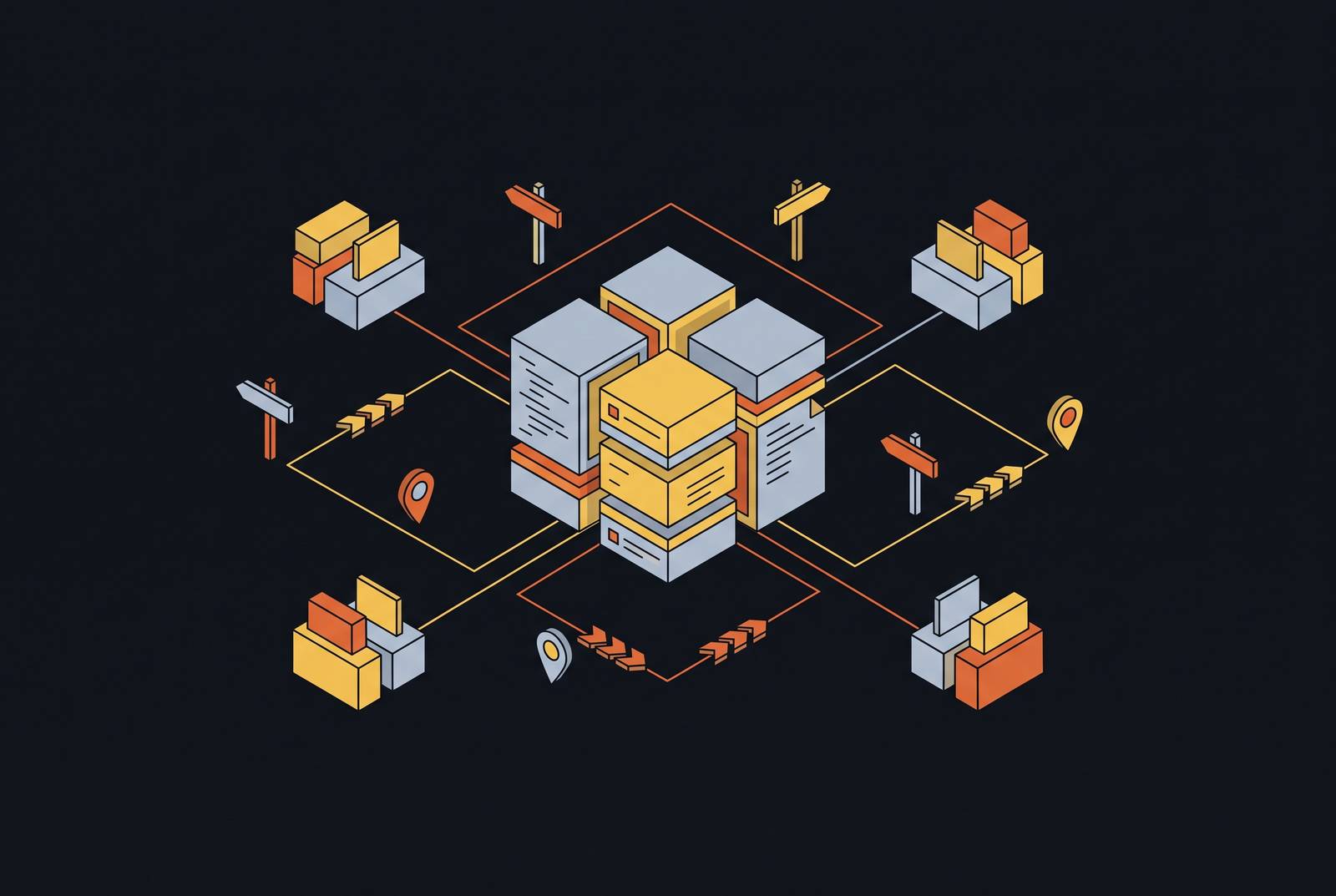
For enterprises with large, complex codebases, the context layer is not a configuration detail. Deployed as a Docker Compose stack inside the company's own infrastructure, it indexes every repository in an organization and makes the full codebase searchable and navigable, both for human users, engineers, PMs, support staff, and new hires, and for AI coding agents via MCP-based connectors. The self-hosting dimension matters specifically for onboarding in regulated or security-sensitive environments: sensitive code never leaves the customer's environment, which makes it possible to give new engineers and their AI tools broad codebase access from day one without routing queries through external servers.
Making the codebase answerable to non-engineers without adding to the senior engineer's queue
In distributed engineering organizations, the interrupt load from codebase questions does not end after a new engineer ramps. The co-location analog is instructive. The cost is low and the engineer controls the interruption. In a distributed team, the same question arrives as an async message, requires the engineer to switch context, compose a written answer, and wait for follow-up. The cost is structurally higher for every party.
Non-engineers need answers about the codebase: which service owns a feature, what a configuration change will affect, where a bug was introduced. But they rarely need the full translation capacity of a senior engineer. They need a legible, searchable interface to the codebase. A natural-language interface that non-engineers can query directly removes the interrupt entirely for the large class of questions that do not require judgment. Which files are responsible for the billing integration is answerable from the codebase. Whether to refactor the billing integration before the Q4 launch is not. Sourcebot gives non-engineers a natural-language interface to query repositories and project tools, connected via MCP to Jira, Linear, Slack, and more. Those are architectural choices, security tradeoffs, and the organizational history behind a design that looks wrong but isn't.
Data privacy and access control decisions that distributed teams must make before giving new hires broad codebase access
Giving new engineers and AI agents broad codebase access from day one is the fastest path to orientation, but it requires deliberate access control and data residency decisions that distributed teams often defer until an incident forces them. The specific risk is real: AI coding tools that route code through external servers create data residency and regulatory exposure. Teams that give new engineers broad access to sensitive repositories via cloud-hosted AI tools may be sending that code outside their jurisdiction or control without realizing it.
A governance risk that surfaced in March 2026 made the stakes concrete. Continue.dev, an Apache 2.0, model-agnostic assistant that connects any model including fully local runtimes via Ollama, vLLM, or LM Studio across VS Code and JetBrains, is one option for teams that want to keep all code-processing local without sacrificing AI assistance. Neovim is not officially supported.
The self-hosted deployment model addresses the data residency problem structurally. When the code intelligence platform runs inside the company's own infrastructure, as Sourcebot does via Docker Compose running the Sourcebot container alongside Postgres and Redis, new engineers and AI agents can be given broad codebase access from day one without any code leaving the customer's environment. Access control decisions that distributed teams need to make explicitly include which repositories are accessible to new engineers during the orientation window, whether AI agent tool access is scoped per project or global, and how SSO and access controls are enforced across the code intelligence layer. Self-hosted platforms with enterprise security features can enforce these systematically rather than on a per-tool basis.
What a working distributed onboarding system looks like end to end
Effective codebase orientation for distributed teams is not a collection of independent techniques but an integrated system where each layer depends on the ones beneath it. A context infrastructure of code search and MCP connectors to project tools makes the full codebase answerable to both engineers and non-engineers. Access controls and data residency decisions are made at the infrastructure level before any of this is rolled out. Identify the three subsystems that generate the most senior-engineer translation interruptions, document them to the point where the AI agent can answer questions about them accurately, and measure what happens to interrupt frequency in the next onboarding cycle.