Why New Hires Stall Before Their First Commit and How Leaders Fix It
Codebase navigation, not access or task clarity, is what actually delays new hires.
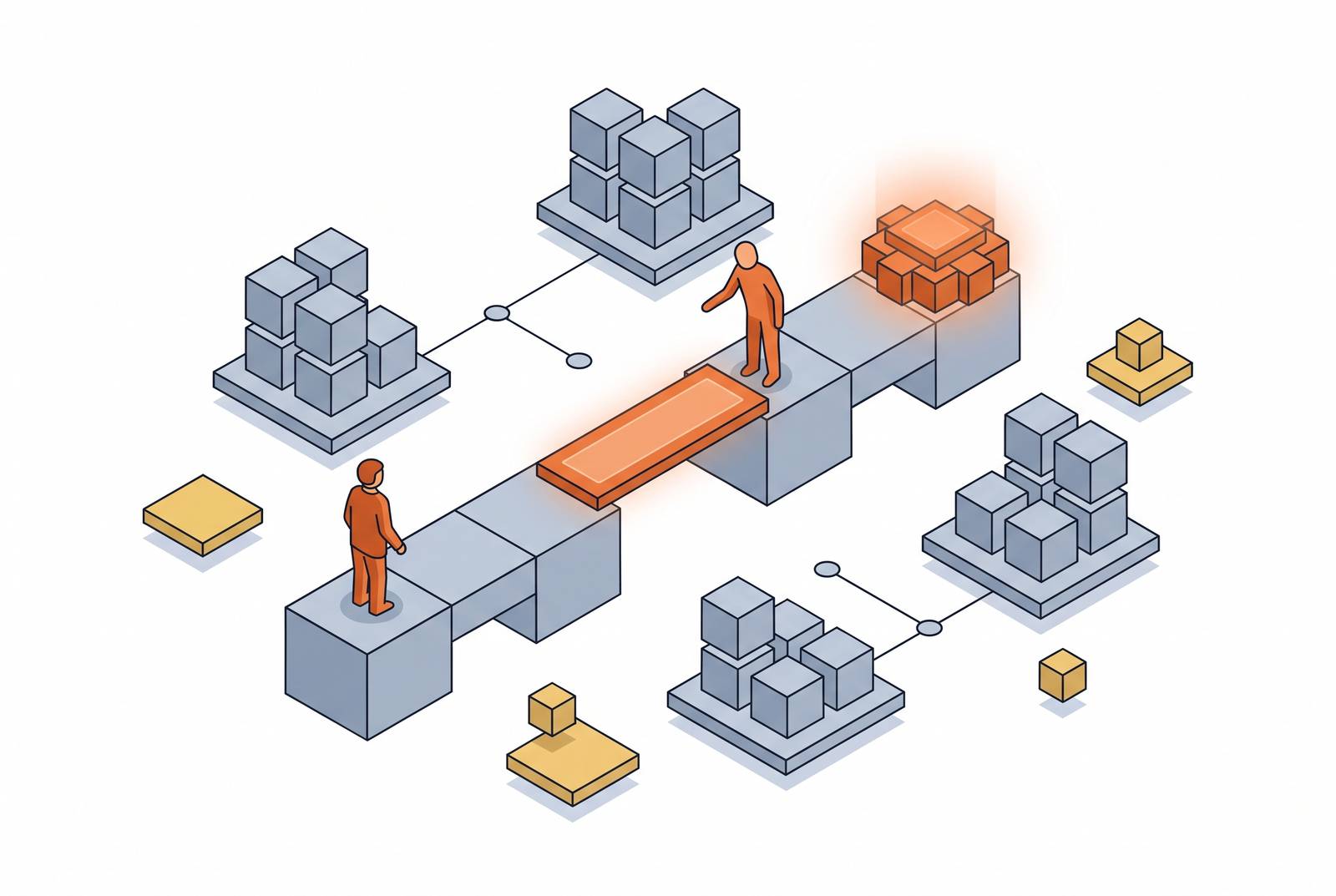
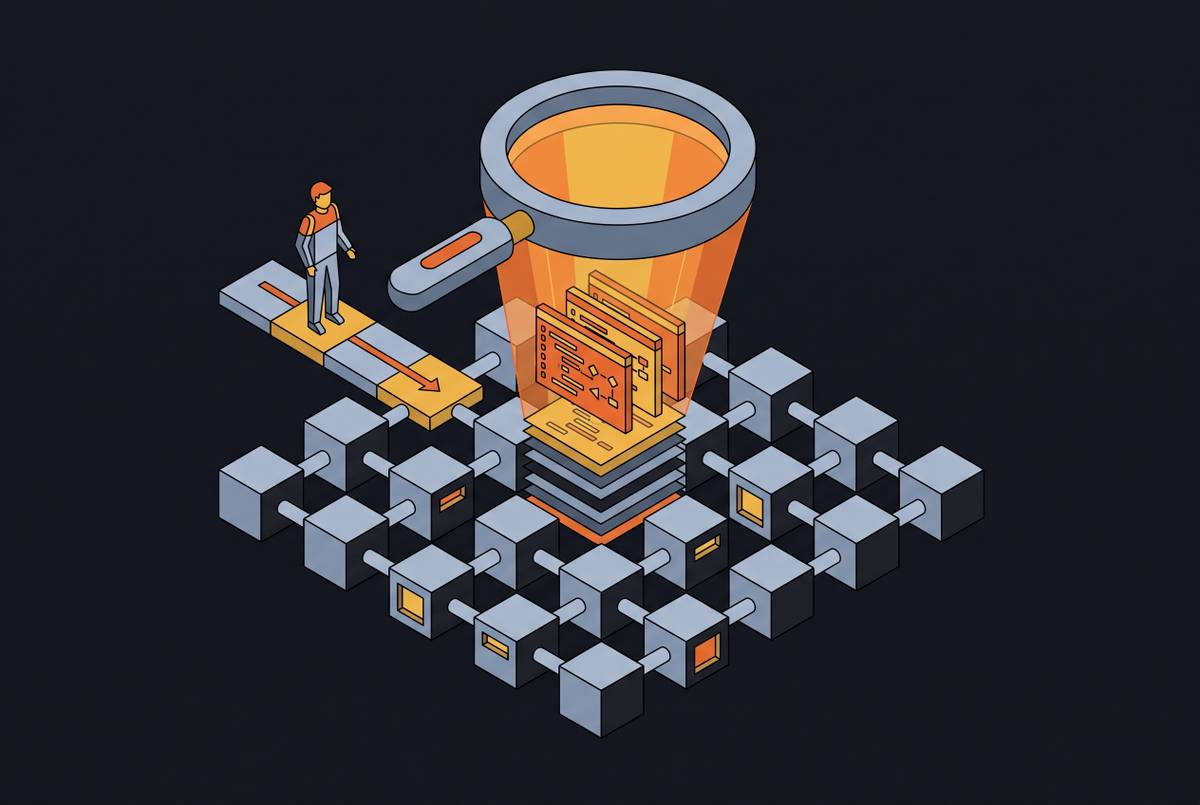
New hires stall because the codebase is an unnavigable black box, not because of a missing badge or a vague ticket. Engineering leaders tend to diagnose onboarding delay by looking at the two problems they can see and fix fastest: provisioning and task clarity. Provisioning and task clarity are the easiest causes to solve, but solving them does nothing about the one cause that actually eats weeks: the new hire's inability to find their way around the code itself. Knowledge retrieval, the process of locating the right service, tracing a dependency, and figuring out which pattern the team actually follows, drags on for weeks or months, and it is the piece leaders systematically underinvest in.
A new hire can have valid credentials, a fully running local environment, and a well-scoped ticket sitting in their queue, and still be completely stuck. They can't trace how a request moves from the API gateway to the database three repositories away. They read the README, follow its instructions, and discover the architecture it describes was replaced two quarters ago. None of that is an access problem or a task-clarity problem. It is a navigation problem, and it is the one most onboarding programs don't actually budget time for.
Cycloid's 2026 developer onboarding guide treats codebase orientation as its own discrete stage, separate from access provisioning and environment setup, and sets a target of two to four hours for a new hire to get oriented. Four hours is a reasonable target if a new hire can query the codebase directly and get an answer. It is not a reasonable target if the only way to understand how a service works is to find the one person who remembers writing it.
This is why a strong, experienced engineer can walk into a new codebase and look mediocre for months. Treating that stall as a performance problem rather than an environment problem is the mistake that keeps teams fixing the wrong stage of onboarding year after year.
How codebase ignorance self-amplifies through interrupt loops
Codebase ignorance doesn't stay contained to the new hire. One confused new hire is a manageable cost. Three or four onboarding simultaneously, each generating a steady stream of "where does this live" and "why does this work this way" questions, turns into a standing tax on the team's most experienced people.
The senior engineer is the hidden casualty in this arrangement, and they are precisely the person a team can least afford to slow down. Ad-hoc architecture explanations repeated to each new hire individually, confused pull request reviews that take three rounds instead of one because the author misunderstood a pattern nobody wrote down: these are the real line items in the cost of a black-box codebase, and they land disproportionately on the engineers whose time is most expensive and most scarce.
Full Scale's 2026 onboarding guide frames the arithmetic directly: every week a senior engineer spends confused is a week of salary spent on negative output, and that's before counting the additional time senior staff lose pulling that person along. Cycloid's guide quantifies the platform-team side of that same cost, putting manual onboarding overhead at up to twenty hours of a senior engineer's time per sequence. At a hiring pace many growing teams sustain, that twenty-hour figure, multiplied across simultaneous onboarding cohorts, adds up to a full-time equivalent spent on hand-holding.
Stale documentation makes the loop worse. The loop feeds itself: the more questions pile up, the less time senior engineers have left to fix the documentation or build the tooling that would stop the questions at the source. Teams in this position don't drift toward a fix. They stay stuck, because the people positioned to fix the stall are the same people being consumed by it.
The stall worsening as AI tools generate more code than any engineer can navigate unaided
AI coding tools have made this problem worse, not better, despite making individual engineers faster. Code generation tools let any engineer produce working code faster than before, and that means the total volume and complexity of code a team produces grows faster than any one person, new or senior, can absorb through reading and memory alone. A codebase that used to take a new hire two weeks to get a working mental model of now accumulates new services, new abstractions, and new internal libraries at a pace that outruns the old method of learning a system by osmosis.
This isn't limited to new hires, and it isn't a competence gap either: it's the absence of an index that makes the organization's own code discoverable, and it affects everyone, just more severely the less institutional memory a person has built up.
For a new hire, the effect is sharper, because they have no fallback. A new hire has no mental map of which services own which behavior and no standing relationship with a colleague willing to drop their own sprint work every time a question comes up. They are navigating the same expanding surface area as everyone else, with none of the context that makes that surface area navigable for a tenured employee.
The AI coding agent a new hire turns to for help runs into the identical wall, just at machine speed. A hire can log into every system and still be unable to make a safe, production-ready contribution, a distinction GitDoc's 2026 onboarding duration analysis draws explicitly: administrative readiness and role readiness run on separate clocks, and most onboarding programs only close the first one. AI agents don't resolve that second clock on their own. They face the exact same context gap as the human being they're assisting, and closing that gap requires a context layer built for agents specifically, precomputed and indexed rather than reconstructed query by query, which is the structural problem the next two sections take on directly.
What the onboarding timeline data reveals
Onboarding isn't governed by one clock. Administrative setup, role ramp, and cultural integration finish on entirely different schedules, and treating them as one combined "onboarding" process is what lets a team declare a new hire onboarded while that person is still navigating the codebase blind. GitDoc's analysis lays the separation out clearly: administrative setup, accounts, hardware, and basic access, can finish in a matter of days. Technical roles take longer still, because the work depends on context, judgment, and the ability to execute safely in a system that doesn't tolerate guessing.
Cycloid's guide puts the industry average time-to-productivity at two to four weeks. Teams running automated, self-service onboarding compress that same window to under a day. That reflects a structural difference in how the codebase itself is made accessible from day one.
The first-commit benchmark makes the location of the stall unmistakable. Teams with well-maintained software catalogs and genuinely navigable codebases get a new hire to their first commit in one to two days. Almost none of that three-week gap is spent waiting on provisioning tickets or clarifying task scope. It is spent trying to understand a codebase well enough to make a change in it safely, which is precisely the stage most onboarding programs treat as informal and self-directed rather than something to be engineered.
CorrectContext's 2026 best practices guide finds that structured pre-boarding, getting paperwork, accounts, and initial reading done before day one, accelerates time-to-first-commit by an average of five days. The much larger share of the gap belongs to codebase orientation, and pre-boarding checklists don't touch it. Leaders who invest heavily in provisioning automation and pre-boarding paperwork are solving a real but comparatively small problem. The bulk of the compression available to them sits in making the codebase itself legible. The fixes below are aimed at that.
The five structural fixes that compress codebase ramp time, in the order they should be applied
These five fixes aren't interchangeable options a team can pick from based on preference. The largest compression in ramp time comes from making the codebase itself navigable, and every fix after that first one reinforces that foundation. Applied out of order, the later fixes still help, but they help less, because they're propping up a codebase that remains, at its core, illegible to anyone without years of tenure.
Fix 1: Deploy a code intelligence platform that indexes every repository and makes the codebase searchable by anyone. This is the fix with the most leverage, because it attacks the root cause directly. A new hire who can search across every repository the company owns, by symbol, by usage pattern, or by a plain natural-language question, stops routing their questions through a senior engineer and starts finding answers directly in the code. That single change collapses orientation time more than any process adjustment can, because the codebase stops being something that has to be explained out loud and becomes something a person can simply query. It also extends the benefit past engineering: product managers, support staff, and technical writers need codebase context too, and they almost never receive onboarding tooling built with them in mind. Self-hosted deployment matters for teams in regulated industries, since keeping proprietary source code inside the organization's own network controls is a requirement, and that requirement rules out tools that only run as external hosted services. Sourcebot's single-container deployment model meets that bar without forcing a separate air-gap infrastructure project just to get code search working.
Fix 2: Surface architectural context through MCP so AI coding agents and new hires draw on the same organizational knowledge. Precompute the cross-repository context, architecture decision records, design patterns, service ownership, guardrails, once, and expose it through MCP, rather than leaving every new agent session or every new hire to rediscover that context from scratch. An agent without precomputed context reconstructs organizational relationships on every query, burning time and compute on retrieval the team already knows the answer to. A new hire doing the equivalent thing through a string of Slack DMs is running the identical process, just slower and at the cost of a colleague's attention. Engineering leaders who write a CLAUDE.md file, document architecture decisions, and record coding standards once, then surface all of it through MCP, apply that work to every future agent run and every new hire using an agent simultaneously. The investment compounds across every future hire who draws on it. Sourcebot's MCP-based connectors expose this kind of context to agents running inside Cursor, Claude Code, and other leading coding environments, giving a new hire's agent the same organizational grounding a senior engineer carries around implicitly.
Fix 3: Replace manual documentation maintenance with tooling that generates always-current docs from the live codebase. Stale documentation isn't a discipline failure that better habits would fix. Cycloid's guide describes a well-maintained software catalog as functionally replacing the senior engineer who used to explain where everything lives, once that catalog exists and stays current, that explanation becomes self-serve.
Fix 4: Build a self-service internal developer platform that eliminates provisioning tickets. Cycloid's guide describes the automated version: identity provisioning triggers access across every system through SSO and role-based policies, eliminating the three to five tickets and one to two days of waiting that manual provisioning typically requires. This fix is necessary, and it buys back real time, but it doesn't make the codebase navigable on its own. It just clears the runway so more of the new hire's time lands on orientation.
Fix 5: Pair every new hire with a buddy whose explicit job is to make sure no codebase question goes unanswered for more than a few hours. CorrectContext's 2026 guide specifies the profile precisely, at least six months of company tenure, a willingness to commit a regular weekly block of time, the ability to answer questions without judgment, and access to the informal networks a new hire has no way to reach alone. That buddy's job gets dramatically lighter once the codebase is already searchable, because their role shifts from explaining the system to pointing someone toward the answer it already contains, a fraction of the cognitive cost, and sustainable even when the team is heads-down on a deadline.
How to measure whether the fixes are working
Most onboarding dashboards track the wrong signals. Completion of an HR checklist and attendance on the first day confirm that a person showed up and filled out their forms. Neither tells a leader whether that person can navigate the codebase safely, which is the only question that actually matters for role readiness.
Three metrics reflect codebase readiness directly: time-to-first-commit is the first. The inbound interrupt rate on senior engineers is the second: tracking how many architecture and codebase questions route to senior staff per new hire per week shows whether the codebase itself is answering questions or whether people still are. New hire Net Promoter Score in the early weeks is the third, a direct read on whether the onboarding experience felt navigable or chaotic, and low early scores correlate with early attrition, which erases the entire onboarding investment a team just made.
Full Scale's guide names one-year retention as the metric engineering leaders ultimately care about, with time-to-first-commit serving as one of several earlier milestones to track along the way. The operational version of this advice is straightforward: review these three numbers at the thirty-day mark for every new cohort, and when the interrupt rate stays high, treat that as a signal pointing at specific knowledge gaps the codebase tooling hasn't closed yet. Fix the tooling. The person stuck inside it isn't the one who failed.