Interrupt Load Measurement and Its Effect on Senior Engineer Output
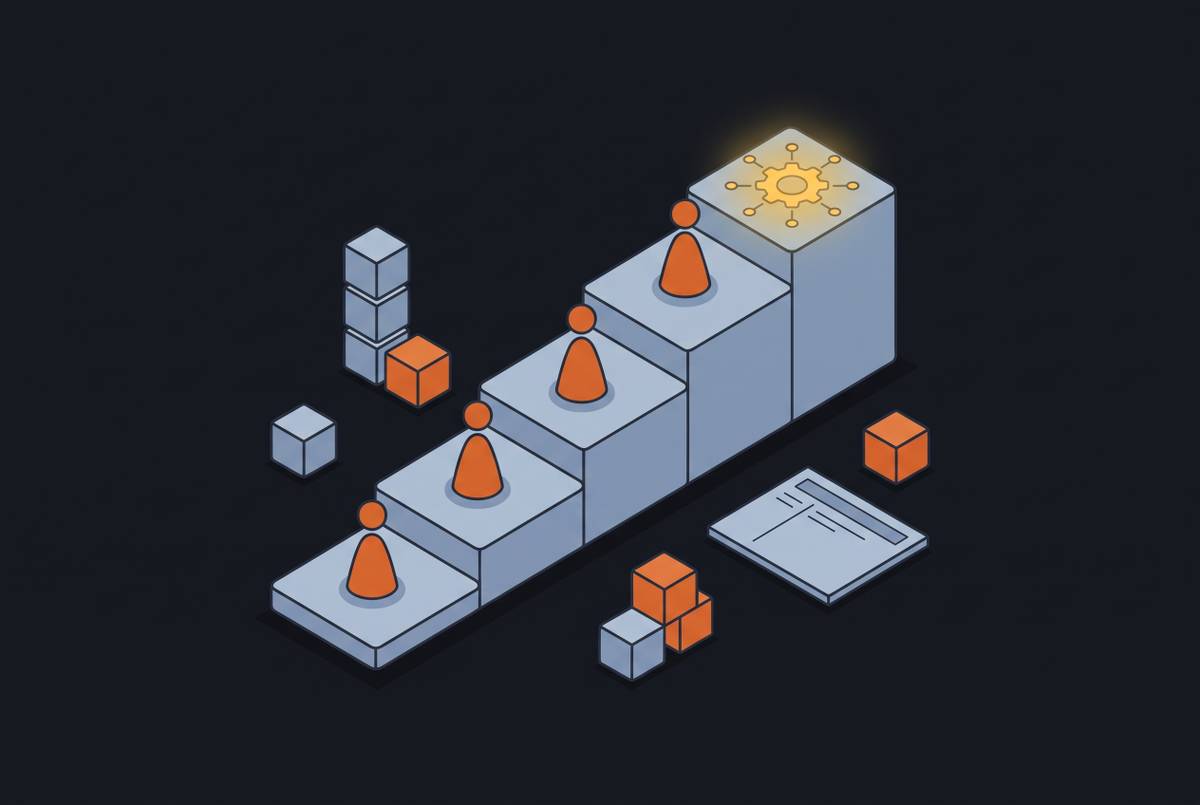
Senior engineers absorb most interruptions while AI adoption leaves them behind.
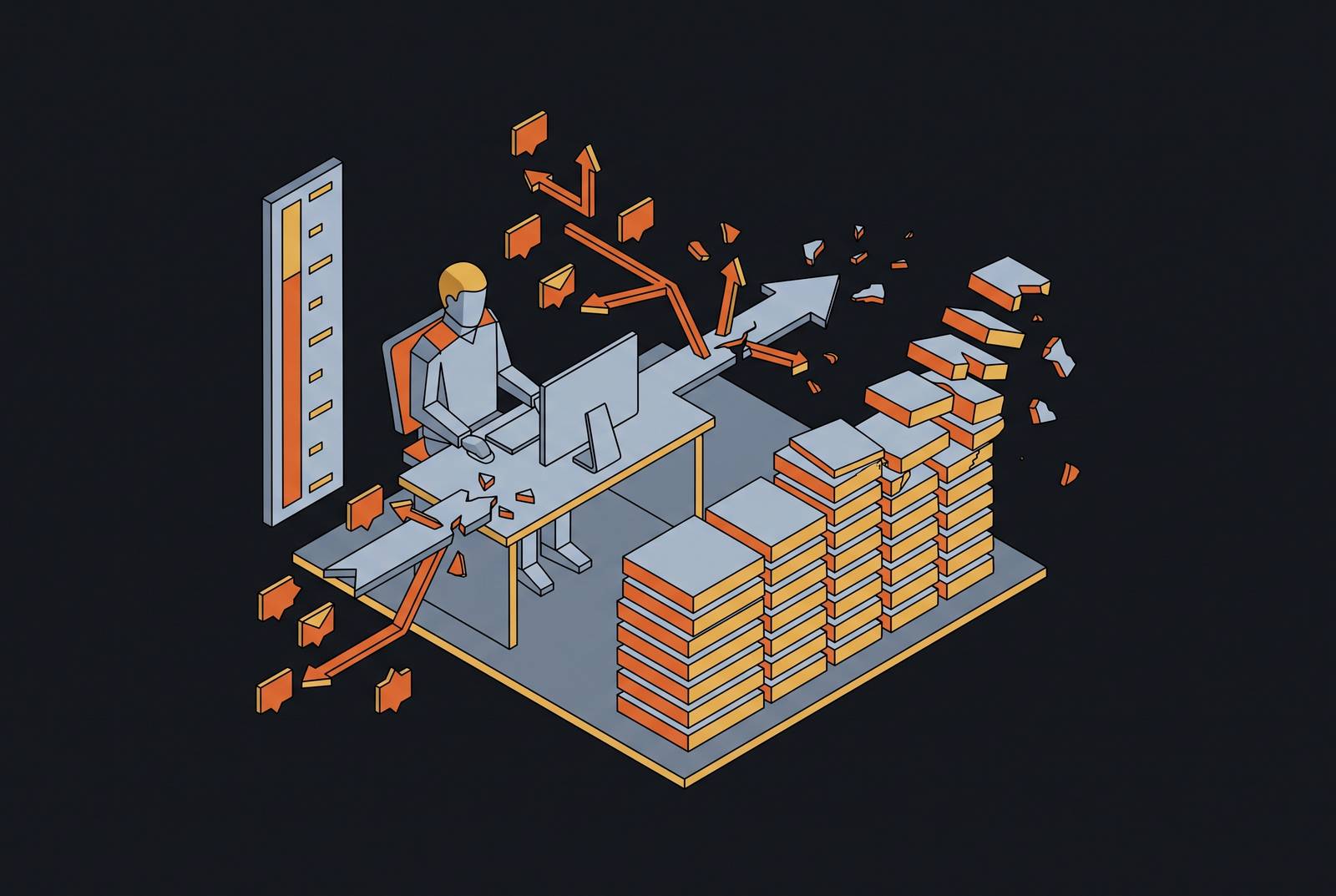
A senior engineer's calendar tells a story before any dashboard does. A Slack ping about where the auth middleware actually lives. None of this looks like a crisis on any given day, so it never gets measured until someone senior quits.
A simple structural cause drives this, even if the fix isn't simple. Onboarding a new hire was never bottlenecked by how fast someone could read code; it was bottlenecked by how much senior-engineer time it took to translate codebase knowledge into answers for juniors, PMs, and support staff. That translation work doesn't scale, because it depends on a small number of people who've internalized years of architectural decisions nobody wrote down.
AI tooling was supposed to relieve some of this. Instead, it has widened the gap. Research covering tens of thousands of developers across more than a thousand teams found that AI adoption skews heavily toward newer-to-company engineers who are navigating unfamiliar codebases, while senior engineers adopt these tools at lower rates, likely because they're skeptical AI can support the kind of complex, context-dependent work they actually do. That skepticism isn't irrational. It just means seniors remain the fallback for every question a junior engineer or an AI agent can't resolve on its own, and that fallback role hasn't gone anywhere.
Meanwhile, the Stack Overflow Developer Survey found that "too many interruptions" was the top productivity complaint for a large majority of engineers, ranking above technical debt and tooling problems combined. Putting those two findings together sharpens the picture: senior engineers are the group least helped by the current wave of AI adoption and the group absorbing the most interruptions, and those two pressures don't just coexist, they compound. The story here concerns a systems problem, not lazy juniors or distracted managers. It's a systems problem, born from an information asymmetry that nobody designed on purpose, and it's why measurement, not exhortation, has to come first.
Interrupt load and why it is harder to see than it looks
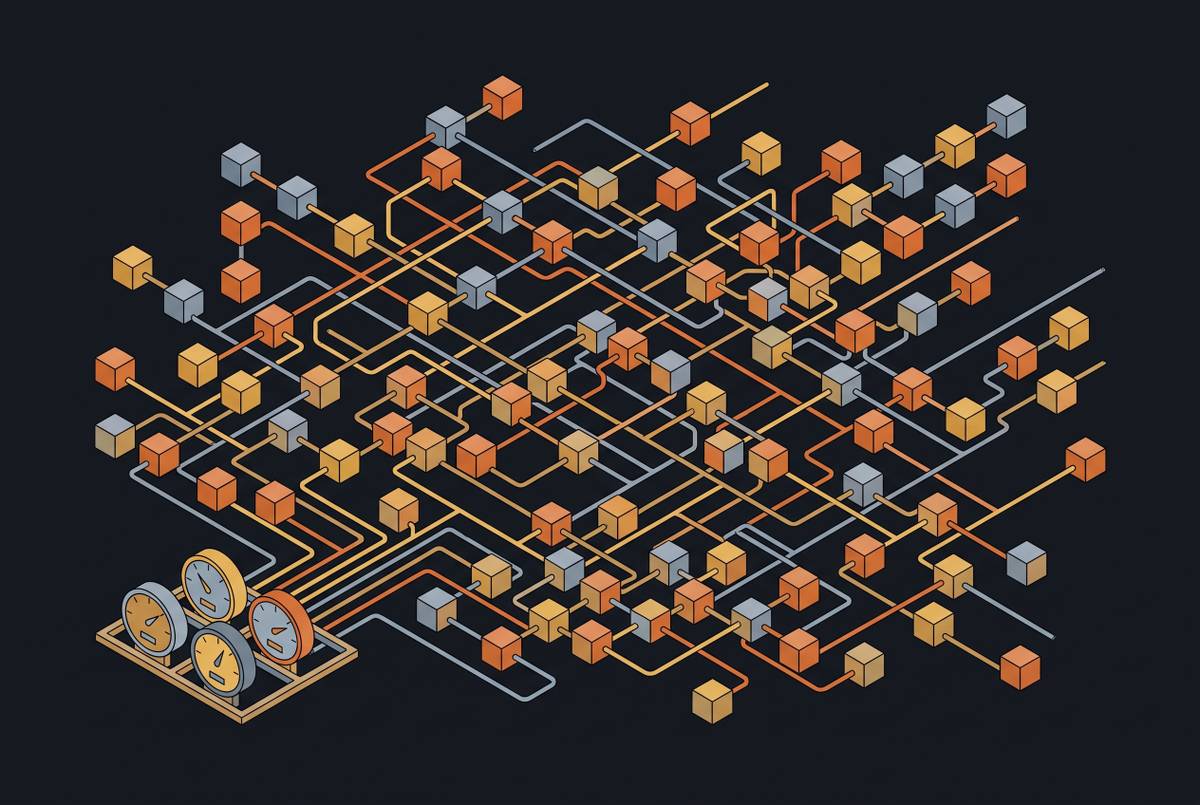
"Interrupt load" sounds like a single thing you could count on one hand, a tally of pings per day. It's a compound of costs stacked on top of each other, each with its own weight. It's a compound of four distinct costs, each with its own measurement signature and its own recovery time.
The first is context-switch cost, and it's the most intuitive: every interruption, whether it's a Slack message, a PR review request, or an incident page, forces a substantial period of lost focus before deep work resumes, regardless of how trivial the interruption seemed. The second is review-hours by role. Review work doesn't distribute evenly across a team; it concentrates on whoever has the judgment to approve a risky change, and PR aging data reveals that concentration clearly once you know to look for it.
The third cost is quieter and easier to miss on a calendar review: meeting fragmentation. Four one-hour meetings spread across a day can add up to a schedule that looks reasonable in aggregate, total hours are fine, and still leave a senior engineer with zero usable blocks of deep-work time. A calendar audit that only counts hours in meetings misses this entirely. What matters is not how much time meetings take, but how they're spaced, and spacing is precisely what most calendar tools don't report on by default.
Interrupt load is a compound of four distinct cost types, each with a different measurement signature and a different recovery time, and that's part of the reason it survives inside organizations that otherwise measure everything.
The metrics that expose interrupt load at the system level
None of the metrics that expose interrupt load are new inventions. What's new is reading standard delivery data through the lens of reviewer capacity and maker-time protection, instead of the raw throughput lens most dashboards default to.
Start with PR aging: how long a change sits before first review, and how long it sits again before final approval. This is a direct measure of reviewer bandwidth and where load concentrates, and one engineering productivity guide from September 2026 names it as the first system check any engineering leader should run. The urgency here isn't abstract. Faros.ai's AI Engineering Report found that AI-accelerated coding has driven a 441% year-over-year spike in PR review times: the queue senior engineers are staring at didn't get shorter when code generation got faster, it got longer.
Reviewer load concentration is the second metric, and it's arguably the cleanest one available, because it requires no survey and no self-report. PR assignment data reveals it directly: how much of the review workload sits with a handful of senior engineers or tech leads, visible the moment someone pulls the numbers. Pair that with rework rate, which tracks how often PRs bounce back because requirements or architecture decisions arrived too late in the process. A high rework rate signals that seniors are being dragged into correction loops after the fact, rather than consulted upfront where their judgment would have been cheaper to apply.
Complexity-adjusted throughput addresses a problem that raw PR counts create on their own: a framework published in 2026 assigns point values by difficulty, easy, medium, hard, rather than counting merged PRs as interchangeable units. That distinction matters specifically for senior engineers, whose real contribution is disproportionately weighted toward the hard end of that scale, the kind of work a simple PR count actively penalizes.
Finally, DORA's change failure rate and lead time for changes deserve a place in this set, though not as an isolated management fad. DORA's 2025 report found that higher AI adoption correlates with both increased delivery throughput and increased delivery instability. Change failure rate now carries more diagnostic weight than deployment frequency when the goal is understanding senior-engineer output specifically. What these metrics share is a refusal to reward activity for its own sake. Lines of code, commit counts, PR volume, and story points all inflate under AI assistance without any proportional increase in shipped value, and no serious engineering organization treats lines of code as a primary metric anymore, even though it still shows up on executive dashboards because it looks concrete and reassuring.
Why AI adoption makes interrupt load harder to measure
The comforting assumption is that AI tooling should make this whole measurement problem easier: faster code, cleaner metrics, obvious wins. The opposite has happened.
The bottleneck simply moved. Faster code generation doesn't shrink the review queue, it grows it, and the review burden concentrates even further on the senior engineers who are qualified to sign off on it. Authoring was never really the constraint. Reviewing, validating, and integrating what AI produces is, and that shift is invisible to any dashboard still counting commits.
Volume inflation makes this worse. AI assistants inflate commit counts, PR volume, and lines of code without a matching increase in value shipped, and DORA's 2025 research confirms that AI adoption raises both throughput and delivery instability at once. Raw volume metrics, in other words, mean less in 2026 than they did two years earlier, at precisely the moment leadership is most tempted to trust them.
Then there's the finding that should give every engineering leader pause. A randomized controlled trial by METR found that experienced developers using AI tools were, on average, slower on complex open-source tasks, and researchers attributed the slowdown to time spent verifying AI-generated suggestions inside large, architecturally dense codebases. A February 2026 follow-up complicated the picture further, finding that a meaningful share of developers had self-selected out of submitting tasks they expected AI to speed up, which biased the original result downward. Neither study resolves cleanly in either direction, and that's the honest state of the evidence: AI tools help with some tasks and add verification overhead on others, and the net effect depends heavily on the complexity of what's being reviewed.
Acceptance rate is the most commonly reported AI productivity metric and also one of the most misleading; post-acceptance edit rate, how often developers rewrite suggestions they just accepted, is a far better signal of whether an AI tool is augmenting or interrupting flow. A team can show high acceptance rates, rising PR volume, and faster lead times, all the signals that usually mean things are going well, while simultaneously piling more review burden onto senior engineers than it had before adopting AI at all, an unsettling result for anyone hoping for a simple story. Senior engineers are simultaneously the least helped by AI tools and the most interrupted, and the two pressures compound.
Where the measurements reveal recoverable senior-engineer output
When the right metrics are run consistently, the interrupt load on senior engineers doesn't scatter randomly across the organization. It concentrates in two places, both of which are structurally addressable rather than permanent features of the job.
The first is onboarding translation, and the data here is striking. A 2025 enterprise study across six multinationals found that time-to-tenth-PR for new hires ran substantially longer on teams with no AI tool usage compared to teams using AI tools daily. A follow-up run across a large cross-organization sample found the current average sitting well below the Q1 2024 baseline, more than half off. That gap is almost entirely senior-engineer time that used to go into translating codebase knowledge for people who hadn't yet built the mental model themselves, and it's the single most directly recoverable category of interrupt load available to any organization willing to measure it.
The second is architectural review concentration. Reviewer load data consistently shows a small number of senior engineers or tech leads absorbing a disproportionate share of review work, particularly on the hardest PRs, exactly the category that complexity-adjusted throughput frameworks are built to capture and that a simple PR count would miss entirely. This is the harder problem to solve, because architectural judgment doesn't transfer the same way onboarding knowledge does.
Scale matters here too. Looking at a very large sample of developers between November 2025 and February 2026, one analysis found that AI-authored code now makes up roughly a quarter of all production code, and developers who use AI daily merge nearly a third of their output from it. The stakes for getting this right aren't abstract, either. Losing a senior engineer is expensive well beyond the hiring cost, and organizations with focus-oriented cultures report meaningfully lower turnover than interrupt-driven ones, which makes this as much a retention question as a productivity one. Atlassian's 2025 developer experience survey backs this up from a different angle: developers lose a substantial number of hours weekly to non-coding work, with a large majority losing at least several hours and half losing ten or more, much of it spent finding information and switching contexts, both of which land disproportionately on the senior engineers who are the information source in the first place.
Codebase Context Infrastructure and the Structural Demand on Senior Engineers
It isn't about asking senior engineers to protect their calendars more aggressively or block off more focus time. The durable fix comes from giving junior engineers, PMs, and AI agents a direct interface to codebase knowledge that doesn't have to route through a human being at all.
The mechanism is straightforward to describe, if not always simple to build. When a new engineer or a non-engineer can ask, in plain language, where the authentication logic lives, how a dependency chain actually connects, or where a bug originated, and get an answer without pinging someone senior, that question never becomes a Slack interrupt in the first place. Every question answered this way is one that the reviewer load concentration metric won't register six months later.
The technical foundation for this shifted meaningfully in late 2024, when Anthropic introduced the Model Context Protocol. By late 2025, OpenAI, Anthropic, and Block had co-founded the Agentic AI Foundation under the Linux Foundation, with OpenAI contributing AGENTS.md, Anthropic contributing MCP itself, and Block contributing its goose framework, now present across tens of thousands of repositories. A standardized protocol matters because it means codebase context can move reliably from a code search or memory tool into whatever agent environment an engineer happens to be working in, Cursor, Claude Code, or otherwise, rather than being locked into a single IDE integration.
Persistent codebase memory carries the actual weight of the mechanism. Memory that survives IDE restarts, model updates, and team turnover means a new developer benefits immediately from the same accumulated structure that senior engineers built up over years, rather than starting from zero. Memory infrastructure that skips an MCP interface requires bespoke integration work for every agent it touches, which just relocates the maintenance burden instead of removing it.
None of this matters if data privacy and security go unaddressed, and for most engineering organizations, that is the issue that decides everything else. A large share of organizations name data privacy and security as the top barrier to adopting LLM tools at all, and for any company handling sensitive source code, every prompt sent to an external server is a fresh compliance exposure. Self-hosted code intelligence, deployed as a single container inside an organization's own infrastructure, answers the "where does the data go" question with "nowhere, it never leaves this subnet," and that answer is what actually closes security reviews. One documented case involving an n8n and Ollama deployment had a security review stuck for a month before that exact answer resolved it in a single meeting.
The enterprise options here already span a real range. GitLab Duo Self-Hosted supports on-premises deployment through the open-source vLLM framework, along with private-cloud paths through AWS Bedrock and Azure OpenAI, which gives regulated organizations a way to align with their existing security requirements. Self-hosted code intelligence platforms that run as a single Docker container and connect to tools like Jira, Linear, and Confluence through MCP-based connectors offer a comparable path, extending codebase context to both human engineers and AI agents without code ever leaving the organization's own servers. Bring-your-own-model flexibility matters alongside this, since a platform that locks context to one specific cloud model just recreates the same sovereignty problem that self-hosting was meant to solve.
Building a measurement system that tracks interrupt load over time, not just once
The value of this whole framework comes from running it repeatedly, since each interruption imposes a substantial period of lost focus before deep work resumes, a cost that accrues whether the interruption was a Slack message, a PR review request, or an incident ping.
Together, they expose where the system is actually constrained, and they give leadership a clean before-and-after comparison for any change made in response, whether that change is a new review policy, a staffing shift, or a piece of codebase context infrastructure rolled out to junior engineers.
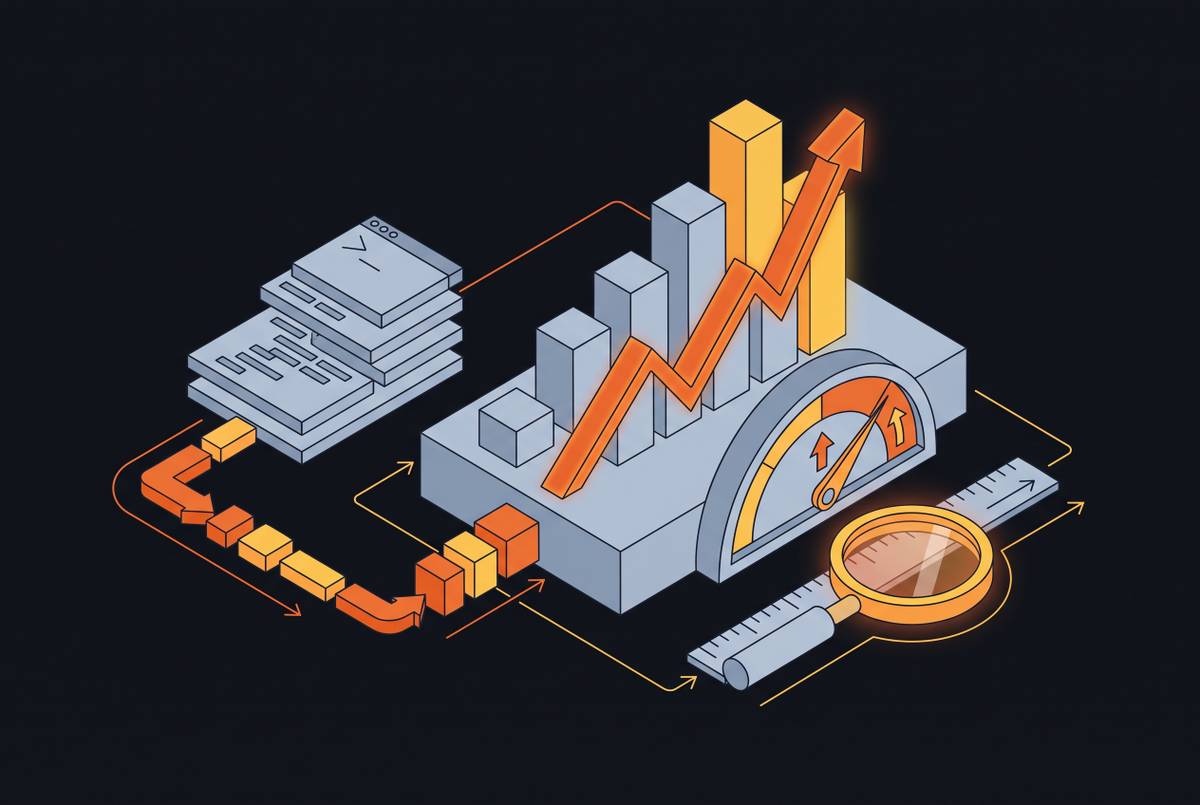
That comparison only works with a real baseline, though. ROI reporting on any AI tool requires comparing performance across thirty or more days before and after deployment, specifically to separate the tool's actual effect from ordinary week-to-week variation in team performance. Without a baseline, every improvement or regression that follows becomes a story someone tells rather than a number anyone can defend. Engineering leaders who take interrupt load seriously treat it the way they'd treat latency or error rate: not a problem to fix once, but a metric to watch permanently, because the conditions that concentrate load on senior engineers don't go away on their own, they just find a new place to hide until someone measures for them again.
Sources
- Measuring engineering productivity in 2026
- Developer Productivity Guide: Measurement and Metrics in 2026 | GoGloby
- The Hidden Cost of Interruptions — How an Interrupt-Driven Day Destroys Productivity and Creativity
- The Hidden Costs Of Interruptions At Work - Fast Company
- Adoption and Impact of Command-Line AI Coding Agents: A Study of Microsoft's Early 2026 Rollout of Claude Code and GitHub Copilot CLI
- Humans are Missing from AI Coding Agent Research
- Top 100 Developer Productivity Statistics with AI Tools 2026