Scope Boundaries Between Developer Experience and Product Engineering Teams
Clear customer focus reveals where product engineering ends and developer experience begins.
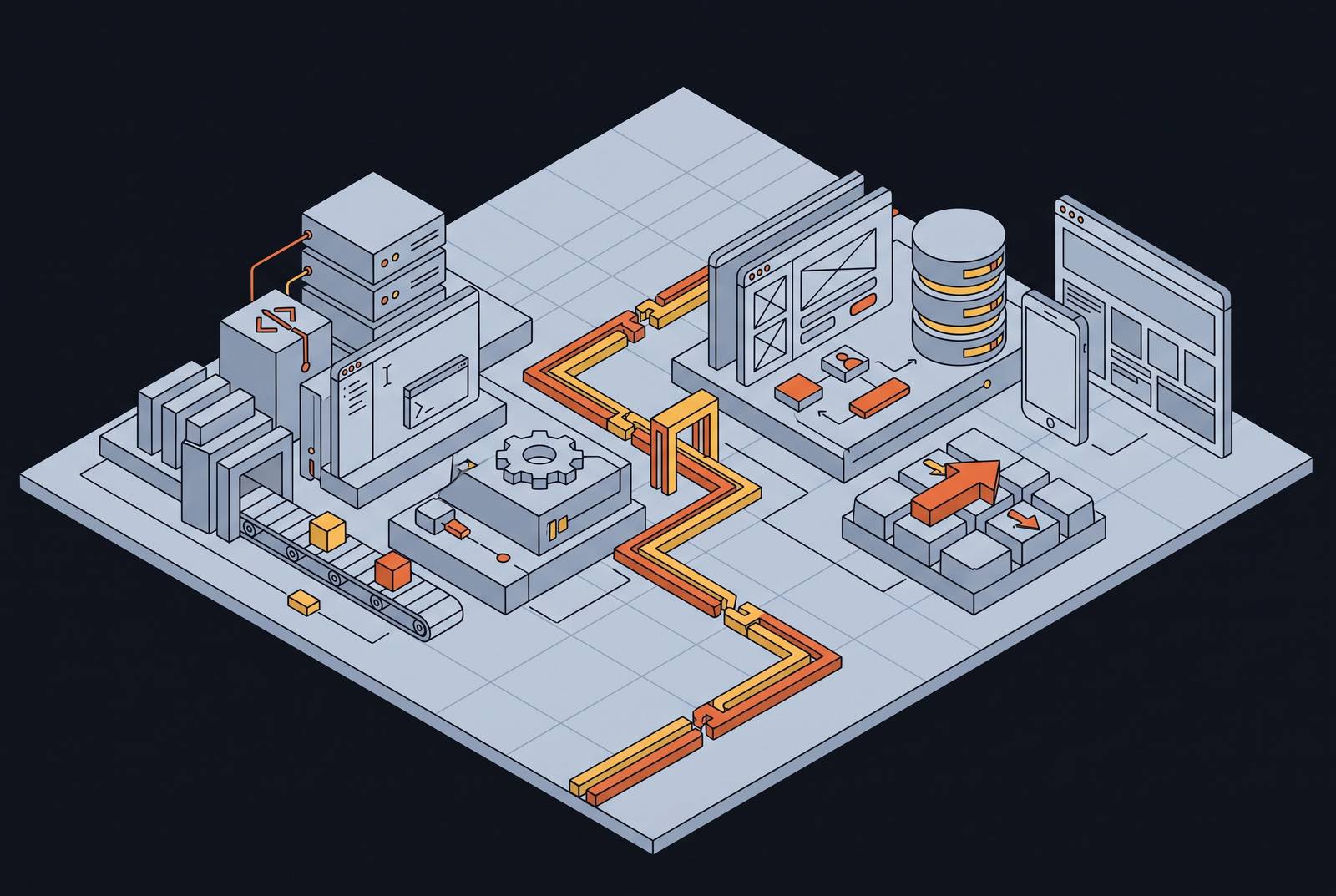
A team ships a feature on time, on spec, under budget, and nobody uses it. A product manager writes a brief that seems reasonable, and engineering spends two sprints re-scoping it because the spec missed a technical constraint nobody flagged early. These are not one-off execution mistakes. They are structural symptoms of a boundary problem: nobody was clear on who owned the decision, and by the time anyone noticed, the work was already wrong.
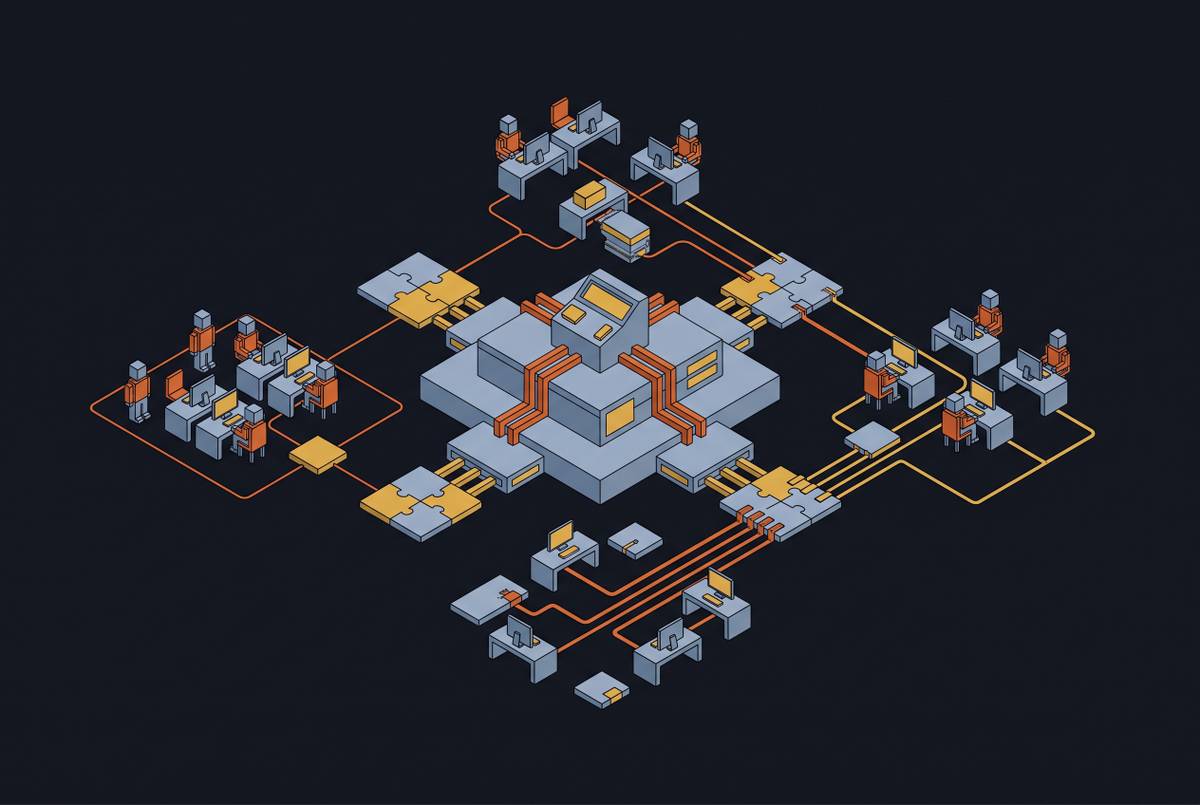
The boundary in question sits between Developer Experience (DevEx) teams and product engineering teams, and it's gotten blurrier as both functions have grown. Look at how the big platform-building companies describe their own DevEx charters. Slack's is "making the development experience seamless for all engineers." Stripe's is "make software engineering easier at Stripe." The Financial Times describes its version as making things "as easy as possible for product developers, whether that be by providing tools, clarity, support, or standardization." These charters read as inspiring precisely because they're broad, and that breadth is deliberate. But broad charters collide with product engineering's own expanding scope, and both teams end up touching the same source code management systems, the same CI/CD pipelines, the same developer tooling. The overlap is built into how both roles were defined. It's built into how both roles were defined.
AI coding tools have made the collision harder to ignore. Tools like Claude Code and Kilo Code now let product managers prototype features themselves and let engineers own problem definition in ways that used to belong to a PM's job description. Writing in Medium in July 2025, David Bennell pointed out that AI tools blurring role boundaries between PMs and engineers unsettles the very organizational lines these teams were built around. When the boundary is unclear, the result isn't just confusion, it's interrupt-driven work, duplicated tooling, and two teams that can't hold focus on the customer each was actually built to serve.
The one distinction that holds: who is the customer
Strip away the org chart and the tech stack, and one question separates these two functions cleanly: who is the team's output actually for?
Product engineering exists to serve the external user. Per BEON.tech's analysis, product engineers own the full feature lifecycle, from problem definition and user research through build and post-launch iteration. They're not just implementers waiting on a spec. DevEx (sometimes folded into platform engineering) exists to serve the internal engineer. Its job is to cut friction, reduce cognitive load, and eliminate toil for the people building the actual product.
This isn't a semantic distinction. It changes how each team measures success, what shows up on each team's roadmap, and whose complaints actually move the needle. A report from Pensero describes DevEx teams treating internal developers as customers in the literal sense: measuring their satisfaction, tracking their productivity, catching friction points before they turn into a crisis, and building the internal platforms those developers rely on daily. Product engineers, meanwhile, are trained to think in outcomes rather than outputs. Per BEON.tech, the operating issue isn't "how do we build this," it's "does this solve the user's problem," and a good product engineer has enough technical fluency to sit with that tension without needing a handoff to someone else.
The distinction also tells you what a product engineer is not. Not a full-stack developer with a PM title stapled on top. Not a DevEx engineer who happens to write product code. And practically, when the distinction holds, every team has a straight answer to the question, "who asked for this, and why does it matter to them?" When a team can't answer that question about a piece of work sitting on its roadmap, that's usually the first sign the boundary has already slipped.
What DevEx teams own, and what falls outside their scope
Per a Pensero report, DevEx ownership breaks down into a handful of concrete areas: developer tools and internal platforms (IDEs, SDKs, CI/CD pipelines, cloud infrastructure); documentation that's actually findable and current; onboarding that gets new engineers productive fast; the shape of internal processes like code review and deployment workflows; developer support through feedback loops and internal forums; and productivity metrics, which reveal to a platform team whether any of this is working.
The leverage math here compounds developer time savings across the whole engineering org into a much larger total. Pensero's April 2026 report states that one engineer saving two hours a week from a better CI/CD pipeline isn't much on its own. Multiply that across 200 engineers and it's 20,800 hours reclaimed in a year. That's the entire justification for DevEx as a function, not a nice-to-have side benefit.
What falls outside DevEx's lane is just as important to name. Defining external product features isn't DevEx work. Owning user research with paying customers isn't either. Neither is deciding what the product itself should do next. And DevEx teams get pulled into product fire drills, covering for an understaffed product team, or building a one-off tool for a single squad's pet workflow. Every time that happens, the DevEx team loses a slice of its multiplicative leverage and starts looking more like a reactive help desk. A clear charter only works if engineering leadership actually protects it; otherwise DevEx becomes whatever the loudest team needs this week.
DevEx is distinct from its neighbors too. Per Pensero's report, platform engineering is narrower, focused mostly on infrastructure, deployment pipelines, and production systems. SRE keeps production systems reliable, which is a different job than improving the day-to-day experience of writing code. IT and enterprise support handles hardware and licenses reactively, while DevEx is supposed to build proactive solutions before someone has to file a ticket.
Product engineering's ownership and expanding scope
Product engineering owns the feature lifecycle end to end: defining the problem, doing the user research, building the thing, shipping it, and iterating after launch. Per BEON.tech's report and a Kellton analysis, this is a different job than "implement the ticket." Kellton's framing is useful here: what separates product engineering from traditional software development is that it holds user experience, scalability, performance, security, and business growth potential together as one problem, rather than treating "does it work" as the only bar to clear.
The product engineer title specifically describes someone who owns the "why," not just the "how." Per BEON.tech, that means the job includes defining the problem to be solved and understanding user context, not just code. Spec-driven development tools have started to formalize this. Amazon's Kiro.dev, built on Anthropic's Claude Sonnet 4.0, requires the engineer or PM to write out features, acceptance criteria, and design constraints before any code gets generated. That flips the human's role: instead of writing implementation, the human is defining intent and constraints from the start. Either way, product engineers increasingly have to hold context across the whole arc of a feature rather than just their one assigned piece of it.
AI coding tools speed up the prototyping half of this job. They don't touch the harder half. Deciding what to build, and for whom, stays squarely inside product engineering's lane, no matter how fast the code gets written. And there's a clear line marking what's not product engineering's job: optimizing internal developer workflows, keeping the CI/CD pipeline running, building golden paths for other teams to follow. That's DevEx work, even when a product engineer is the one who first notices the friction.
Where the boundary visibly blurs, and the reasons it keeps happening
Four spots keep coming up as places where the line gets genuinely hard to draw.
The first is internal tooling that touches the product directly. A DevEx team builds a deployment tool that changes how features get flagged for release, and suddenly that team is making product decisions without meaning to. The second is onboarding: DevEx owns the onboarding process, but the product team usually holds the codebase context a new engineer actually needs, including the specific decisions behind a service and the reasons a workaround exists. Who ends up writing the runbook is often decided by whoever gets annoyed first.
The third is metrics. Cycle time, deployment frequency, and the rest of the DORA metric family function as DevEx inputs, but they're also product delivery signals, and the two teams don't always define or measure them the same way. Once cycle time becomes a DevEx target on its own, the incentive can shift toward optimizing the metric rather than the underlying delivery goal, even when the harder cross-boundary work is exactly what the product team needs most. The metric ends up optimizing against the very goal it was meant to serve.
The fourth is new, and it's growing fast: AI coding agent configuration. As tools like Claude Code and Cursor become standard issue, someone has to configure the MCP connectors, maintain the AGENTS.md file, and set up codebase context for those agents to actually use. That work sits right at the seam, infrastructure-adjacent enough to look like DevEx's job, but directly shaping how product engineers write code every day.
Bennell's July 2025 piece points to a broader shift behind all four of these overlaps: advanced AI tooling now lets non-engineers prototype and lets engineers define problems, which means the old three-specialist model, PM, designer, developer, is starting to look inefficient on its own terms. Most of the time, though, the real cause is simpler and less exciting: the boundary got set when the team was small, and nobody revisited it as the company scaled or as AI tooling changed what each role could actually do.
Three tests for drawing a working boundary
The customer test comes first: whose feedback actually validates whether this work succeeded? If the answer is an internal engineer, it's DevEx. If it's an external or paying user, it's product engineering. Apply this test to any disputed work item before anyone gets assigned to it, not after.
The leverage test comes second: does this improvement multiply across many engineers, or does it only serve one team's one feature? DevEx work should look like the 20,800-hours-a-year example from Pensero's report, benefit spread wide. A tool that only one product squad will ever touch belongs on that squad's roadmap, full stop, even if a platform engineer is the one who happens to build it.
The roadmap test comes third: whose roadmap does this actually belong on? If it only makes sense next to shipped user value, iterated based on user behavior, it's product engineering. If it reduces friction across many teams and gets iterated based on developer feedback, it's a platform roadmap item.
Run these three tests against AI tooling specifically, and codebase context infrastructure (MCP server configuration, AGENTS.md governance, code search and navigation) comes out clearly on the DevEx side. It multiplies every product engineer's effectiveness rather than serving one team's one feature. Even with all three tests applied, some ambiguity survives at the handoff point itself, who owns the seam between infrastructure built by a platform team and how a product team actually uses it. The fix is writing an explicit handoff agreement. It's writing an explicit handoff agreement. And none of this holds without leadership backing it up: a DevEx team that gets pulled off platform work every time a product team hits an emergency will lose its leverage regardless of what the charter says.
Where handoffs live and how to keep them clean
A handoff is proof the boundary is doing its job. It's proof the boundary is doing its job: DevEx builds the platform, product engineering uses it, and the line between the two stays visible instead of vanishing into ad hoc favors.
The clearest version of this is the "golden path," the opinionated, well-supported route that a platform or DevEx team builds for product teams to follow. Product engineers who stay on that path move fast. Those who step off it own the cost of stepping off, and that's a feature of the system, not a punishment. The signal that this model is actually working is voluntary adoption. The 2025 DORA report found that 90% of organizations now run an internal developer platform, and the broader platform engineering conversation has shifted toward DevEx precisely because platforms succeed when teams choose to use them, not when they're mandated. A handoff that needs a mandate to survive is a boundary problem wearing a tooling costume. It's a boundary problem wearing a tooling costume.
The mechanics of a clean handoff are fairly concrete. Internal developer portals, Backstage among them, which holds an 89% share of the IDP market according to industry research, act as the interface where DevEx output meets product team consumption. There need to be documented escalation paths for what a product team does when the golden path genuinely doesn't fit their case. And there needs to be a working feedback loop, some real channel for product engineers to report friction back to DevEx so the platform keeps evolving instead of calcifying around decisions made two years ago.
Per a dev.to report, high-maturity platform teams see cognitive load drop by 40 to 50% for the developers using their platforms. That number is reachable, but only when the handoff is clean and the platform actually absorbs complexity instead of quietly pushing it back onto product teams. Handoffs break in predictable ways: DevEx builds tooling without asking product teams what they need, product teams get frustrated and build their own shadow tooling instead of waiting, and nobody ever agreed on what "supported" is actually supposed to mean.
Codebase context infrastructure's place in this 2026 boundary
AI coding agents are now a standard part of how product engineers write code, and that raises a question nobody had to answer two years ago: who owns the infrastructure that makes those agents actually useful? This is new work, and DevEx is its natural home.
It passes the leverage test cleanly. Code search and navigation tools that let both engineers and their AI agents query across every repository, not just whatever's open locally, benefit the whole engineering org at once, not one team's roadmap. MCP server configuration is the clearest example of how fast this space is moving: per Anthropic's announcement donating MCP to the AAIF, reported by neuralcoretech, MCP had crossed 97 million monthly SDK downloads and more than 10,000 active public servers by that point, with every major AI platform now offering native support for it. AGENTS.md governance is following a similar path, now present in over 60,000 repositories after OpenAI and Anthropic jointly donated it to the Agentic AI Foundation under the Linux Foundation. Add to that the ongoing work of maintaining connectors, Jira, Linear, Confluence, and similar tools, wired in through MCP so an agent has project context sitting alongside code context.
Self-hosting belongs to DevEx too, and it's a governance call, not an engineering preference. Where this infrastructure runs, what data ever leaves the environment, and which LLM providers are allowed anywhere near the codebase, these are platform-layer decisions with security and compliance consequences, not something an individual product team should be left to figure out on its own. A self-hosted code intelligence platform, running as a single Docker container inside an organization's own infrastructure, is one pattern that keeps DevEx in full control of this layer: sensitive code never leaves the environment, agents still get full codebase context, and a product engineer gets an answer without pulling a senior engineer off their own work to ask.
There's a related decision hiding in here too. Letting non-engineers, PMs, support staff, a new hire in their first week, query the codebase in plain language is also a DevEx product decision, not a product engineering one. It cuts the interrupt load on senior engineers by giving everyone else a direct line to understanding the code, which is exactly the job DevEx was built to do. And this loops right back to the core argument: if every product team is left to configure its own agent context from scratch, each one builds it slightly differently, security gaps open up between teams, and the same work gets duplicated five times over. That's precisely the scaling failure DevEx exists to prevent.
Practical steps for teams whose boundary is currently unclear
Start with an audit, not a reorg. Take the current list of DevEx and product engineering work items and run each one through the three tests: who is the customer, does this multiply across engineers or serve one team, and whose roadmap does it actually belong on. Most organizations find a cluster of items that fail all three tests at once, usually the one-off tools built during a product emergency that nobody ever revisited.
From there, the fix is less about restructuring teams and more about writing down what's already implicit. Put the customer test into the actual charter language for both teams, so "who asked for this" has a documented answer instead of a hallway one. Build the explicit handoff agreement for codebase context infrastructure specifically, since that's the newest and least-settled seam between the two functions. And get leadership to commit, on paper, to protecting DevEx's roadmap from product emergencies, because a boundary must hold even when things aren't calm. It's a preference that collapses the first time it's tested.
Sources
- A Guide to Building and Scaling Developer Experience Teams in 2026 | Pensero
- Product Management in 2025. AI Tools Blurring the Line Between… | by David Bennell | Medium
- What Is a Product Engineer (And Why the Role Is Growing in 2026) | BEON.tech Blog
- Defining the scope for a developer experience team
- getdx.com
- kellton.com